
Cataract Symptoms, Surgery and Intraocular Lens (IOL) Options
Cataract clouds the eye's natural lens and surgery is the only definitive treatment. See symptoms, surgery timing and four IOL options. Book a consultation in Istanbul.
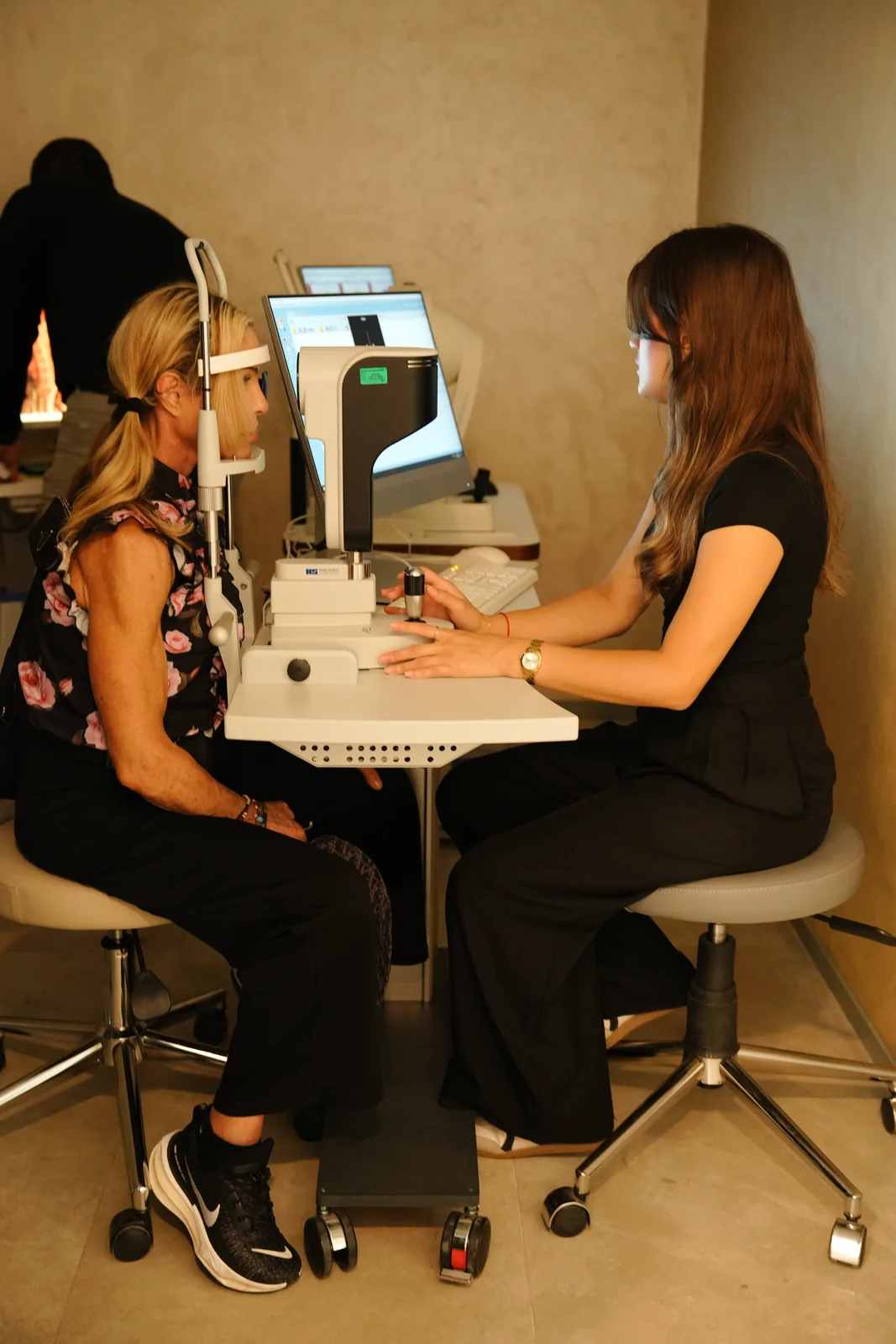

A cataract is the gradual clouding of the eye's natural lens, most common with advancing age. It causes blurry vision, night-time haloes and light sensitivity, and surgery is the only definitive treatment. This page covers cataract symptoms, the surgery itself and intraocular lens options — monofocal, monofocal plus, EDOF and trifocal.
Written by Op. Dr. Anıl Kaya
What Is a Cataract?
A cataract is the gradual clouding of the eye's natural lens. In a healthy eye, the lens focuses light sharply onto the retina; as a cataract develops, the lens grows hazier, light no longer passes through evenly, and vision quality declines step by step.
Cataracts are most often linked to older age and develop as a natural, gradual process. They are not exclusively age-related, though — trauma, certain systemic diseases, long-term steroid use or congenital factors can cause a cataract to appear earlier in life. The pace of progression also varies: some patients notice a change over several years, others much sooner.
Surgery is the only definitive treatment for cataracts. The clouded natural lens is removed and replaced with an artificial intraocular lens (IOL). No eye drop or medication halts a cataract's progression; updating a glasses prescription can ease daily life in the early stages, but it is not a lasting solution.
This page covers cataract symptoms, the surgery itself, intraocular lens options and the recovery timeline. Because every patient differs, the information here is a general framework — a definitive assessment is only possible at examination.
What Causes Cataracts?
What Are the Symptoms of Cataracts?
Cataracts usually progress slowly and may go unnoticed at first. Complaints vary from person to person, but the most common are blurry or hazy vision, haloes around lights when driving at night, growing sensitivity to bright light and sunlight, colours looking less vivid, and a glasses prescription that keeps changing.
These symptoms may appear alone or together. For some patients the first sign is poorer night vision; for others it's blurriness while reading. Some notice colours turning dull first — white surfaces looking slightly yellowish, for example.
Severity can also shift over time: discomfort noticeable only in bright light or at night can, as the cataract progresses, start affecting daytime clarity too. How the symptoms develop is useful information for deciding how often to have follow-up examinations.
Blurry vision is not a symptom of cataracts alone — other eye conditions can cause it too, so a detailed examination is needed to find the cause. Temporary blurriness after cataract surgery is a separate matter, assessed differently from a cataract's ongoing symptoms.
What Causes Cataracts? Risk Factors
The most common cause of cataracts is older age: the proteins in the eye's natural lens gradually lose their structure and transparency over time. This is an expected change in almost everyone as they age, which is why cataracts are among the most common eye findings in older adults.
Cataracts are not limited to older age, though. Eye trauma, certain systemic diseases and long-term steroid (cortisone) use can all cause cataracts to develop earlier in life. A direct blow to the eye, previous intraocular surgery, or a chronic disease left poorly controlled for a long time can also play a role. Congenital cataracts, far rarer, are usually assessed separately in childhood.
Together, these causes show that a cataract is not "only something that happens to older people", but a condition met at different rates across age groups. Which cause applies is assessed during the examination alongside the patient's history and findings; the diagram above summarises these causes by frequency.
Knowing these risk factors is less about prevention and more about knowing when closer follow-up is warranted. Patients on long-term steroid medication, or with a history of eye trauma, may be advised slightly more frequent eye examinations — not a fixed rule, but an individualised approach.
When Should You See a Doctor About Cataracts? Diagnosis and Examination
When blurry vision, night-time haloes or light sensitivity start making daily life, reading, driving or work harder, it's advisable to arrange an eye examination. A cataract does not resolve on its own, and when it reaches the point of needing surgery varies from person to person — only a detailed examination makes this clear.
Diagnosis is made through a standard eye examination: visual acuity, intraocular pressure, the cornea and the back of the eye are assessed together, checking how the clouding matches the reported symptoms. The pupils may be dilated with drops for a closer view of the back of the eye. See /en/eye-exam/ for more on the process.
This assessment does more than confirm a cataract — it also shows whether another eye condition is contributing to the vision loss, which can influence both the symptoms and the lens type later recommended.
Finding a cataract on examination doesn't automatically mean immediate surgery; mild findings may simply call for periodic follow-up, while more pronounced symptoms make surgery a realistic option to discuss.
Pre-Cataract Assessment Steps
When Is the Decision Made for Cataract Surgery?
There is no single "right time" for cataract surgery; the decision depends on how much the cataract affects daily life. Some patients tolerate mild blurriness comfortably for years, while for others reading, driving or working becomes difficult much sooner.
Cataract surgery is not an emergency, but an untreated cataract progresses and vision loss can increase, so symptoms should not be ignored. A more advanced cataract can also make the surgery itself somewhat more complex to plan, one more reason earlier assessment can help.
The decision to operate is made jointly by doctor and patient, weighing symptom severity, impact on daily life, occupational needs such as driving, and the examination findings together. Sharing your own priorities in this conversation helps settle both the timing and the choice of lens.
Once surgery is decided, the process is planned through a detailed pre-operative assessment and explained step by step; the link below covers the surgery process itself in more detail.
Some patients ask about acting early, before symptoms become pronounced; others prefer to wait even once symptoms are fairly advanced. Either way, the right approach is a realistic timing decision reached together, based on examination findings and personal preference alike.
What Is an Intraocular Lens in Cataract Surgery?
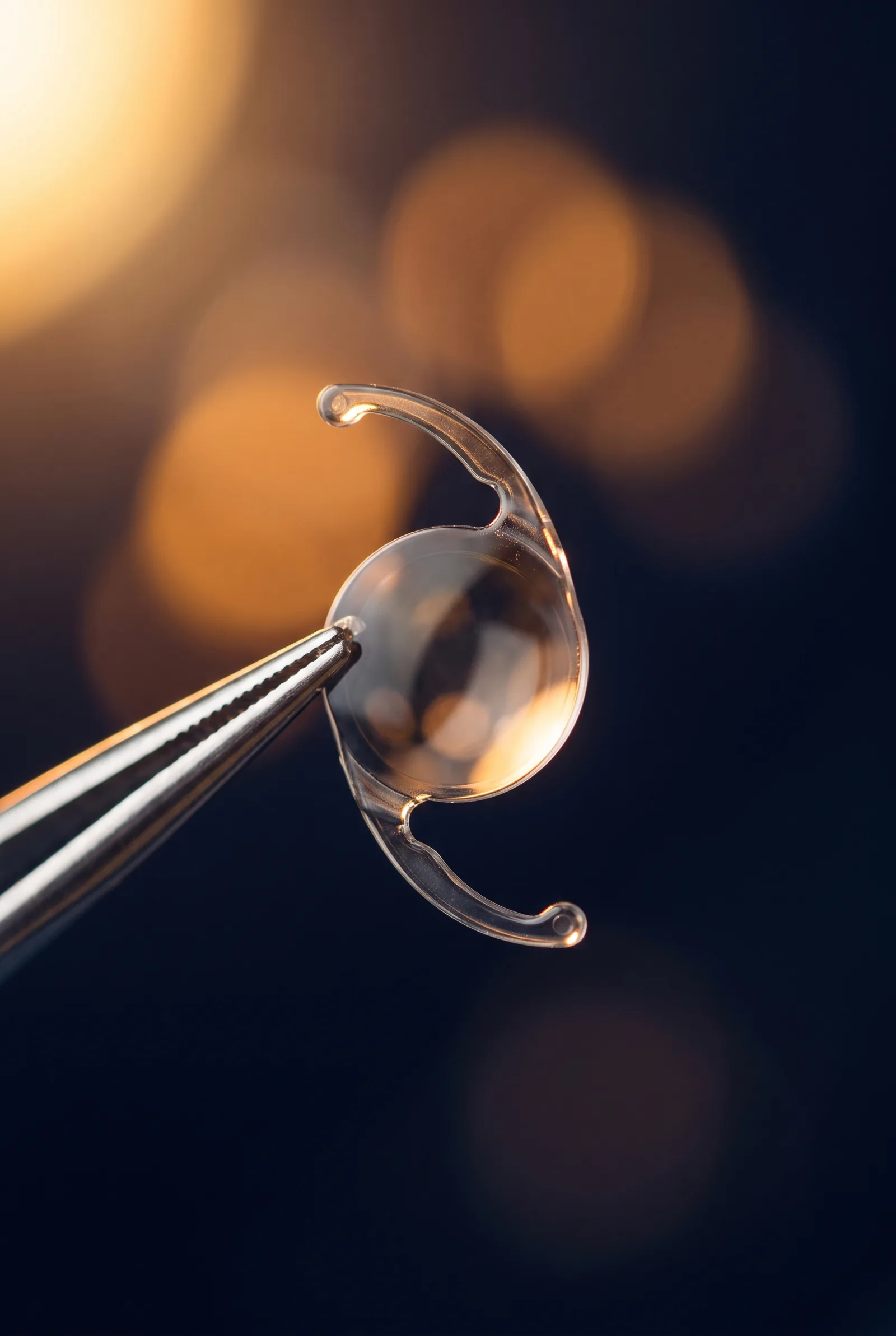
The intraocular lens (IOL) placed during cataract surgery takes over the eye's focusing function and stays in the eye permanently, replacing the removed natural lens. Made in a foldable form, it is inserted through a very small incision and secured in place.
Intraocular lenses are not a single standard product — several lens types exist, each meeting the need for clear vision at different distances to a different degree. Which type is chosen depends on both the patient's everyday visual expectations and the eye's anatomical suitability.
Lens power is calculated individually from biometric measurements taken before surgery, since it determines how closely the outcome matches the intended visual result. This step is carried out for every patient, whichever lens type is chosen.
An intraocular lens is designed to stay in place for life, and under normal circumstances there is no need to remove or replace it — more on this in the FAQ section below.
An intraocular lens is not only a technical requirement of cataract surgery — it also shapes daily life afterwards, which is why the lens type is decided jointly by patient and doctor once detailed information has been given. The four most commonly used lens technologies are introduced briefly below.

Which Intraocular Lens Suits Which Patient?
Which lens type suits a patient is assessed along two main axes: how much they prioritise reducing dependence on glasses, and the eye's anatomical suitability. If clear distance vision alone is enough, a monofocal lens can be a sensible choice — these patients generally don't mind glasses for near tasks.
Patients wanting less reliance on glasses for reading, computer use or daily tasks may consider monofocal plus, EDOF or trifocal lenses. The choice isn't based on preference alone, though: with irregular astigmatism or certain conditions affecting the back of the eye, a monofocal lens can suit better than a multifocal one, since these eyes may not deliver the image quality a multifocal lens needs.
Occupational needs matter too — for someone who drives often at night or does visually demanding work, the risk of night-time side effects is weighed more carefully. For a patient who uses a computer heavily or reads often, intermediate and near clarity may carry more weight instead.
Lens choice therefore weighs the patient's expectations against detailed examination findings; no single lens suits everyone — the right option is determined individually. The flow below summarises this assessment.
Which Intraocular Lens Suits Which Patient?
Monofocal Intraocular Lens in Cataract Surgery
Comparing Intraocular Lenses in Cataract Surgery
The four lens technologies differ in the clarity they provide at far, intermediate and near distances, and in the risk of optical side effects such as night-time haloes and glare. As a general trend, that risk rises somewhat as distance range widens — moving from monofocal towards trifocal — though this balance depends on the individual eye.
The comparison isn't simply about which lens is technically stronger, but which matches this patient's priorities. For someone who drives often at night, a low halo risk may matter most; for another wanting maximum independence from glasses, the balance is weighed differently.
Patients wanting more detail can compare all four types side by side on the /en/cataract/iol-comparison/ page. The most frequently asked comparison — monofocal versus trifocal — is covered separately on /en/cataract/monofocal-vs-trifocal/.
These comparisons summarise general trends; the actual outcome depends on the eye's anatomy and examination findings, with the final decision made together at examination.
| Monofocal | Monofocal Plus | EDOF | Trifocal | |
|---|---|---|---|---|
| Glasses-free vision usable at intermediate distance | — | ✓ | ✓ | ✓ |
| Sharp glasses-free vision at near distance | — | — | — | ✓ |
| Low risk of night-time haloes and glare | ✓ | — | — | — |
Monofocal or Trifocal in Cataract Surgery?
What Measurements Are Taken Before Cataract Surgery?
Once cataract surgery is decided, a detailed pre-operative assessment follows so the correct lens power can be calculated. This looks at several parameters, including intraocular pressure, corneal structure, the condition of the back of the eye, and the lens's position within the eye.
One of the most decisive measurements is biometry: the eye's axial length and corneal curvature are used to calculate the lens power for that patient. These measurements are taken carefully and usually confirmed with more than one method.
Additional refractive errors such as astigmatism are also assessed at this stage and can affect both the power calculation and the lens type chosen; some cases call for lenses that also correct astigmatism. Assessing the back of the eye and cornea also helps plan the surgery safely and indicates the visual quality to expect.
This pre-operative assessment is not only the basis for planning surgery safely, but also key to determining which lens type is most likely to suit the patient.
These measurements are usually completed in a single visit, using quick, non-invasive methods. The results feed into formulas that predict the most suitable lens power for that eye, and are shared with the patient as the basis for the lens-choice discussion.
How Is Cataract Surgery Performed?
The technique most commonly used in cataract surgery today is phacoemulsification. A very small incision is made, and a specialised device breaks up the clouded lens with ultrasonic energy, removing it through that same incision. A foldable intraocular lens is then inserted through the opening and secured in place.
The operation is usually done under topical or local anaesthesia, with the patient awake and feeling no pain, though a slight sensation of pressure may occur. Its length depends on the eye's structure, the cataract's degree and the technique used.
Because the incision is very small and usually self-sealing, recovery tends to be relatively comfortable. After a short period of observation, the patient goes home the same day; the operation is planned as day-case surgery, with no overnight stay.
When both eyes have cataracts, the two operations are generally planned on separate days rather than together. The interval between them depends on how the first eye is healing and the doctor's assessment — chosen for safety and so each eye's recovery can be monitored separately. The simplified diagram below summarises the main steps.
How Does the Lens Change During Cataract Surgery?
Recovery and Follow-Up Timeline After Cataract Surgery
Recovery after cataract surgery varies from person to person but generally follows a similar pattern. Most patients return to light daily activities the day after surgery; vision then improves gradually from the first few days, with full stabilisation taking up to a few weeks. Small fluctuations during this period are normal.
Eye drops prescribed after surgery are used regularly for a period to help prevent infection and support healing; duration and frequency are set individually by the doctor and reviewed at follow-up visits. Using them as directed, without missing doses, matters for a healthy recovery.
Protecting the eye may be advised in the first hours, though keeping it covered all day generally isn't necessary — specific instructions follow surgery. Advice on avoiding strenuous exercise, water in the eye, eye-rubbing, sleeping position and diet is also given individually; a normal diet can usually resume fairly soon, with personalised advice confirmed at follow-up.
Glasses needs depend on the lens type chosen and how recovery goes; a final prescription is usually set once vision has stabilised. The scheduled follow-up visits matter both for confirming recovery is on track and for setting that final prescription; the timeline below summarises a general recovery course.
Recovery Timeline After Cataract Surgery
Possible Risks and Warning Signs After Cataract Surgery
Cataract surgery is widely performed and generally considered safe; as with any surgical procedure, though, certain risks and warning signs can arise. Their frequency and nature depend on the patient's eye structure and general health, and detailed information is given individually at examination.
One thing to watch for afterwards is whether the intraocular lens shifts position over time. Sudden blurring, double or shifted images, or a sense that something has moved inside the eye can signal this — and any such symptom is a reason to see the doctor promptly. Only an examination can confirm it; the symptoms alone are not a diagnosis.
Mild redness or stinging may be noticed briefly after surgery and is a normal part of healing. But severe pain, worsening redness, sudden vision loss or flashes of light should be reported to the doctor. Infection and inflammation are rare, and using the prescribed drops as directed, plus keeping follow-up appointments, helps catch such risks early.
Overall, attending the scheduled follow-up visits and not dismissing unusual symptoms is the most effective way to catch and manage a problem early. Contacting the doctor is always advised whenever there is any concern.
The Connection Between Cataracts and Presbyopia
Presbyopia is the age-related decline in the eye's ability to focus on near objects — a separate change from a cataract. Presbyopia comes from the natural lens losing flexibility; a cataract comes from the lens losing transparency — different mechanisms.
Even so, presbyopia and cataracts commonly occur together in similar age groups, which is why presbyopia often comes up when planning cataract surgery, and the two are usually discussed together when choosing a lens.
Because the natural lens is already removed and replaced during cataract surgery, this stage can also be an opportunity to reduce presbyopia's effect. Multifocal options such as monofocal plus, EDOF or trifocal aim, where the eye allows, to address both the cataract and presbyopia-related near-vision needs at once — one reason cataract surgery can double as a window of opportunity for presbyopia.
Patients with presbyopia who aren't yet ready for cataract surgery can manage it separately in the meantime, with glasses for example; once the time for surgery comes, lens choice is reassessed with up-to-date findings.
More on how presbyopia relates to cataract surgery, and how it affects lens choice, is on the /en/cataract/presbyopia/ page.
Is Blurry Vision a Symptom of Cataracts?
Blurry vision is one of the most common cataract symptoms, but it isn't the only cause. Refractive errors, dry eye and certain conditions at the back of the eye can cause similar complaints, so a detailed examination is needed to find the cause.
Blurriness caused by a cataract usually progresses gradually and worsens over time — patients often can't pinpoint exactly when it began. Sudden-onset blurriness, by contrast, can be a reason for a more urgent visit.
The temporary blurriness some patients notice after cataract surgery is separate from a persistent cataract symptom, and usually eases on its own as part of healing; if it persists or worsens, a doctor's check is advised.
Details such as which eye is affected, at what distance, and how often, help identify the cause at examination — noting briefly how your symptoms have progressed before your appointment can help.
More on the possible causes of blurry vision, its link to cataracts, and when to see a doctor is on the /en/cataract/cloudy-vision/ page.

Four Intraocular Lens Technologies Used in Cataract Surgery
Intraocular lenses used in cataract surgery fall into four main technology groups. A monofocal lens gives clarity at one focal distance, usually distance vision; it is the longest-established and most widely used lens type, and glasses may still be needed for intermediate or near tasks — a familiar, predictable trait.
Monofocal plus (enhanced monofocal) lenses add a degree of intermediate-distance clarity on top of the distance vision a monofocal lens gives, which can reduce glasses use in some everyday activities. Extended depth of focus (EDOF) lenses spread the focal range over a wider band instead, aiming for more seamless vision at distance and intermediate range — worth considering for patients who spend a lot of time on tasks like computer use or reading a dashboard.
Trifocal lenses aim to give clarity at three distances — far, intermediate and near — for patients wanting to reduce dependence on glasses as much as possible. Because they target a wider range than the other types, the eye's suitability is examined separately beforehand.
Which of the four suits a given patient becomes clear at examination, weighing eye structure, everyday habits and expectations of glasses independence together; no lens type is inherently superior — suitability is decided case by case.
Frequently Asked Questions About Cataracts
Below are questions patients frequently ask about cataracts and intraocular lens options, with brief answers; this information is general, and personalised detail is given during the examination.
Can the lens shift after cataract surgery, and how would I know?
Although uncommon, the position of the intraocular lens can shift over time. Sudden blurring of vision, or images appearing double or shifted, can be signs of this. If you notice anything like this, you're advised to see your doctor without delay.
For how many days are eye drops used after cataract surgery?
The duration and frequency of drop use are set individually by your doctor and reviewed at follow-up appointments; they are generally used regularly to cover a defined part of the recovery period.
What has the experience been like for other cataract surgery patients?
Recovery and outcomes can vary from person to person, depending on eye structure, the intraocular lens type chosen and general health. The most reliable information for your own situation comes from a conversation with your doctor during the examination.
If both eyes have cataracts, is surgery done on both at once?
Generally not; the two eyes are operated on in separate sessions. The interval between them is determined by how the first eye is recovering and by your doctor's assessment.
Is cataract surgery risky, and what are the risks?
It is a widely performed procedure that is generally considered safe; as with any surgery, however, some risks exist. Your individual risk is assessed during the examination.
When can I start wearing glasses after cataract surgery?
The need for glasses depends on the intraocular lens type chosen and how recovery progresses; a final glasses prescription is usually determined at follow-up appointments once your vision has stabilised.
Is the intraocular lens permanent, and can it be changed?
The intraocular lens is designed to remain in place for life, and under normal circumstances there's no need to remove or replace it; a change would only be considered in specific medical situations.
How many days does it take for the eye to heal after cataract surgery?
Recovery varies from person to person, but most patients return to their daily activities within days of surgery; full healing can extend over a few weeks. The exact timeline becomes clear based on your eye structure and your post-surgery follow-up findings.
How is cataract treated in children?
Childhood cataract is managed differently from cataract in adults, with closer follow-up, because it can affect visual development; the treatment plan is personalised to the child's age and the characteristics of the cataract.
Can someone with diabetes have cataract surgery?
Yes, diabetes is not a barrier to cataract surgery; however, blood sugar control and the health of the back of the eye are assessed in detail before the operation.
Is cataract surgery painful?
The operation is generally performed under topical or local anaesthesia, and patients do not feel pain during the procedure, although a slight sensation of pressure can be felt. Any post-operative discomfort is usually mild and settles as the eye heals.
References
- What Are Cataracts? — American Academy of Ophthalmology (AAO), 2025
- Cataract Surgery: Risks, Recovery, Costs — American Academy of Ophthalmology (AAO), 2025
Book a Consultation for Cataracts
For more on your cataract symptoms, the surgery process or lens options, book a consultation with Op. Dr. Anıl Kaya at his clinic in Istanbul. At the examination, your eye is assessed in detail, your options are reviewed, and your questions are answered.
Find the Right Path for You
There are many different conditions and options in this area — browse by topic below, or answer a few questions to see the step closest to your situation.
Explore by Topic
The Basics
2 pagesDiagnosis & Methods
4 pagesTreatment
1 pageComparisons
2 pagesDecision Support
1 pageFind What Suits You
The tool will load shortly — or you can contact us directly.



Ophthalmologist · Kartal, Istanbul
Why Op. Dr. Anıl Kaya?
Related Pages
How Is Cataract Surgery Performed?
Which Intraocular Lens Is Right for You?
Intraocular Lens Types Compared: Monofocal, Monofocal Plus, EDOF and Trifocal
Monofocal or Trifocal Intraocular Lens?
Is Cloudy Vision a Sign of Cataract?
What Is a Monofocal Intraocular Lens?
What Is a Monofocal Plus IOL?
What Is an EDOF Intraocular Lens?
What Is a Trifocal IOL?
What Is a Full Eye Examination, and What Does It Check?
Contact and Appointments