
Peripheral Vision Loss
Bumping into things at your side or tunnel vision can signal a narrowing visual field, most often from glaucoma. See when it's urgent. Book an eye test in Istanbul.
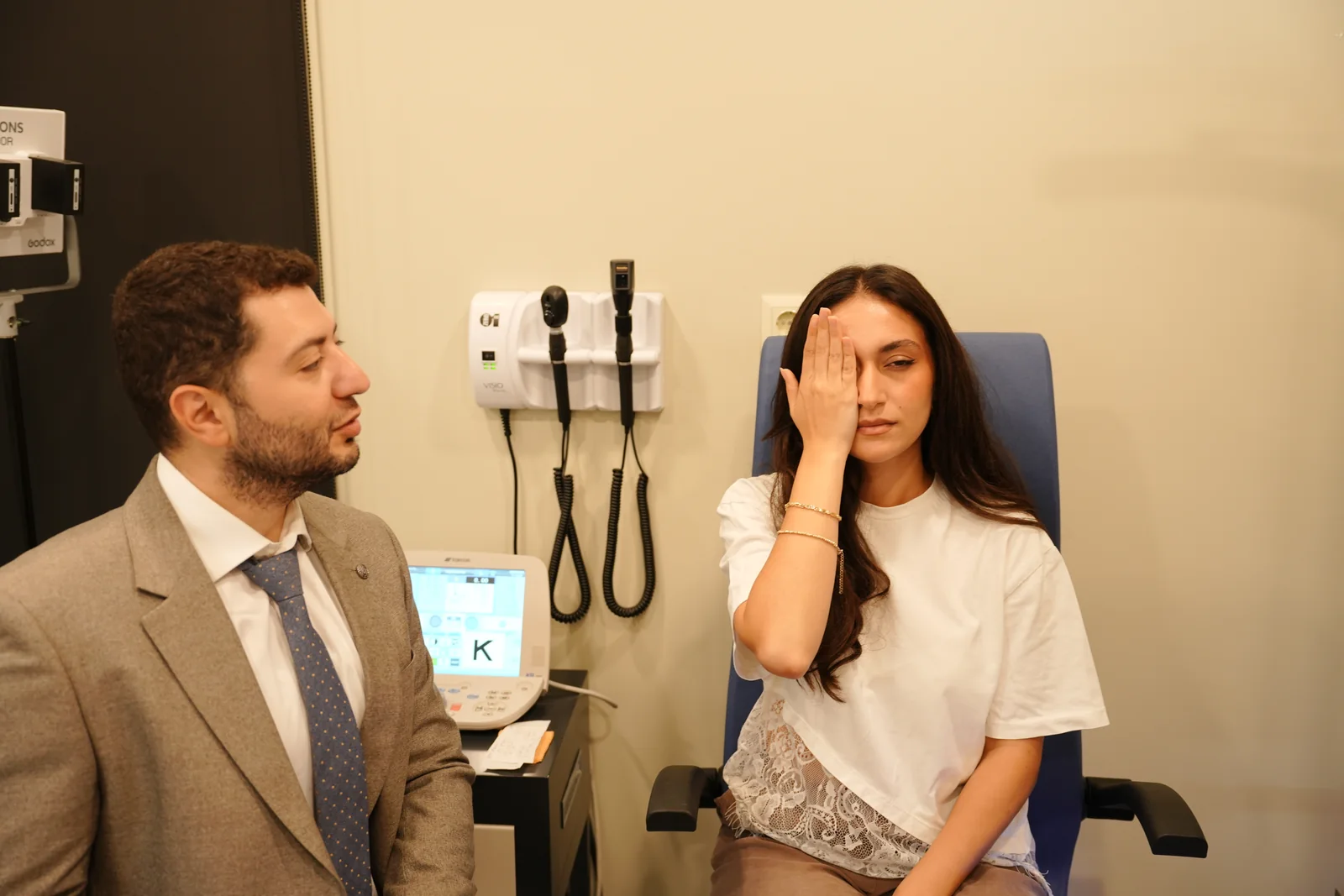

Peripheral vision loss means visual information from parts of the eye no longer fully reaches the brain, often appearing as bumping into things at the side or a tunnel-like feeling. Its most common cause is glaucoma, where raised eye pressure gradually damages the optic nerve. A detailed eye examination clarifies the cause.
Written by Op. Dr. Anıl Kaya
Peripheral Vision Loss
A narrowing in your visual field can show up as bumping into things at the side, noticing cars too late, struggling to see at night, or a tunnel-like feeling. Many people live with this for a long time without noticing it, because the brain often compensates for the missing area using the other eye or by turning the head.
Quick Facts
Peripheral vision loss is usually slow and easily overlooked; its most common cause is glaucoma, though not the only one. A sudden narrowing can call for urgent assessment. Confirming the cause needs a thorough eye examination: eye pressure measurement, an optic nerve assessment and, when needed, a visual field test.
What Does Peripheral Vision Loss Mean?
Peripheral vision loss means visual information from certain parts of the eye no longer fully reaches the brain. It can appear suddenly, or develop gradually over months or years. A slow loss starting at the edges is often linked to chronic optic-nerve conditions such as glaucoma; a sudden onset points to different causes that can sometimes need urgent assessment.
The area affected is also a clue: some patients lose vision only at the edges, while others also lose central field. A slow, peripheral loss can go unnoticed for a long time; people often notice it only through indirect signs, such as stumbling on stairs, bumping into things, or seeing vehicles at the side too late while driving. Because of this, a regular eye examination can reveal an unnoticed narrowing early, even without an obvious complaint - the kind of check that can form part of a routine eye examination.
What Are the Most Common Causes of Peripheral Vision Loss?
One of the most common causes of peripheral vision loss is glaucoma, where raised eye pressure gradually damages the optic nerve, affecting the surrounding field first. Advanced retinal diseases, other optic-nerve damage, certain neurological conditions and bleeding inside the eye can also cause a narrowing visual field. These causes are not equally common: some appear often in clinical practice, others are far rarer and usually confirmed with further tests. The exact cause needs a detailed eye examination.
Glaucoma is seen more often in older adults and those with a family history, though it can also appear younger. Retinal causes tend to develop more suddenly and are noticed more easily, while neurological causes and bleeding inside the eye are comparatively rare and can need prompt assessment.
How Often Does Each Cause of Peripheral Vision Loss Occur?
Which Conditions Can Cause Peripheral Vision Loss?
The condition covered in most detail on this site for this symptom is glaucoma, where the narrowing usually progresses slowly and silently, and most patients do not notice it until an advanced stage. You can find more on our glaucoma page.
That said, a narrowing visual field is not always caused by glaucoma; other conditions affecting the retina or nervous system can produce a similar picture, so an eye examination is needed to clarify the source.
A comprehensive eye examination is not limited to glaucoma; it can also reveal conditions such as cataract or retinal findings, and sometimes minor eyelid findings at the same visit. For this reason, a patient with peripheral vision loss is usually offered a full assessment of the eye as a whole.
When Is Peripheral Vision Loss an Urgent Symptom?
A sudden, rapidly developing narrowing, especially with severe eye pain, blurred vision or haloes around lights, can need urgent assessment - see an ophthalmologist without delay. A slow, unnoticed narrowing is not urgent in the same way, but early assessment still matters for stopping further progression.
Taking this symptom seriously matters most for people with a family history of glaucoma, older adults, and anyone previously found to have raised eye pressure - in this group, even a slow narrowing can be the first sign of glaucoma. How long it has lasted, whether it affects one or both eyes, and any other symptoms help your doctor judge urgency, so it helps to note these details before your appointment.
How Is Peripheral Vision Loss Assessed?
For peripheral vision loss, the doctor first asks when it began and how it has progressed, then measures eye pressure, examines the optic disc and, when needed, uses a visual field test (perimetry) to establish the extent and pattern of the narrowing. This forms part of a glaucoma examination and helps tell whether the cause is glaucoma or something else; further imaging may be added when needed. More on how a glaucoma examination works is on our glaucoma test page.
If glaucoma is confirmed, a target eye pressure is set for that patient, and the visual field test is repeated at set intervals to track the condition objectively - showing whether the narrowing has stopped or is still progressing.
In What Order Is the Examination Carried Out When Assessing Peripheral Vision Loss?
How Does Treatment Vary Depending on the Cause?
Treatment for a narrowing visual field depends on the underlying cause. For glaucoma, the aim is to control eye pressure to stop or slow progression - a step-by-step process starting with eye drops and moving to laser treatment or surgery if needed. More on glaucoma treatment options is on our glaucoma treatment page. If the cause is something other than glaucoma, treatment is planned for that specific condition.
For glaucoma-related loss, treatment cannot restore vision already lost; the goal is to protect what remains by stopping further progression, so starting early and staying consistent directly affects the outcome. When the retina or nervous system is the cause, monitoring can involve the relevant specialty, and laser eye treatment may become one of the steps. The right approach only becomes clear after a detailed assessment of the cause.
Whatever the cause, keeping to the recommended follow-up schedule matters greatly; missing drops or skipping check-ups can delay noticing changes in eye pressure or the visual field. Following it matters as much as the plan itself.
Frequently Asked Questions
Can peripheral vision loss be reversed?
It depends on the cause. Visual field loss caused by glaucoma is generally permanent and cannot be restored with current treatment; the aim is to stop it from progressing further. This is why early diagnosis matters so much.
How can I tell if I have peripheral vision loss?
It is difficult to notice at an early stage, because the brain usually compensates for the missing area. Signs such as bumping into things at the side, struggling to see at night, or noticing vehicles at the side too late while driving can be a clue; a definitive assessment is made with a visual field test.
Does this symptom always mean glaucoma?
No. Peripheral vision loss can also be caused by conditions affecting the retina or nervous system, not only glaucoma. The exact cause can only be established with a detailed eye examination.
How is a visual field test (perimetry) carried out?
Perimetry is a non-invasive test in which the patient looks into a device and presses a button whenever a light appears at different points in their field of vision. No cut or needle is involved; because the test demands sustained concentration, some patients find it tiring.
Does peripheral vision loss only occur in older age?
Conditions such as glaucoma, which can cause peripheral vision loss, become more common with age, but the symptom is not limited to older adults; it can also appear at a younger age. Age alone is not a determining factor.
If my visual field test result is normal, does that mean there is no narrowing at all?
A single normal result does not mean a finding will never develop later; regular follow-up at set intervals is recommended, especially for people at risk of glaucoma. It is important to keep to the check-up schedule your doctor recommends.
Which doctor should I see if I notice peripheral vision loss?
It is appropriate to see an ophthalmologist for this symptom; they will review your history and investigate the cause through eye pressure measurement, an optic nerve examination and, if needed, a visual field test.
References
- Visual Field Test and Blind Spots (Scotomas) — American Academy of Ophthalmology (AAO), 2025
- Understanding Glaucoma: Symptoms, Causes, Diagnosis, Treatment — American Academy of Ophthalmology (AAO), 2026
Book an Appointment
If you have noticed a narrowing in your visual field, you can arrange an assessment with Op. Dr. Anıl Kaya in Istanbul without delay. You can request an appointment through our contact page.
Find the Right Path for You
There are many different conditions and options in this area — browse by topic below, or answer a few questions to see the step closest to your situation.
Explore by Topic
Find What Suits You
Glaucoma RoadmapA few questions, the right next step for you

Related Pages
How Is a Glaucoma Test Performed?
How Is Glaucoma Treated?
What Is a Full Eye Examination, and What Does It Check?
What Is a Routine Eye Examination, and How Often Should You Have One?
Cataract Symptoms, Surgery and Intraocular Lens (IOL) Options
Retinal Diseases and Treatment Options
Laser Eye Surgery
Eyelid Surgery and Ptosis Surgery
Contact and Appointments
Would you like to contact the doctor with a Glokom assessment tailored to you?
There are two ways. If you would like the doctor to know your situation before replying, complete the Glokom Roadmap first; if your question is short, write directly. Both reach the same team.
Your age and a short sentence are enough; no medical terms needed. What you write is only sent when you send it; this page stores no information.