
Femto LASIK or SMILE?
Femto LASIK lifts a flap and can treat hyperopia too; SMILE uses a smaller incision with no flap and suits myopia and astigmatism only. Book a consultation in Istanbul.
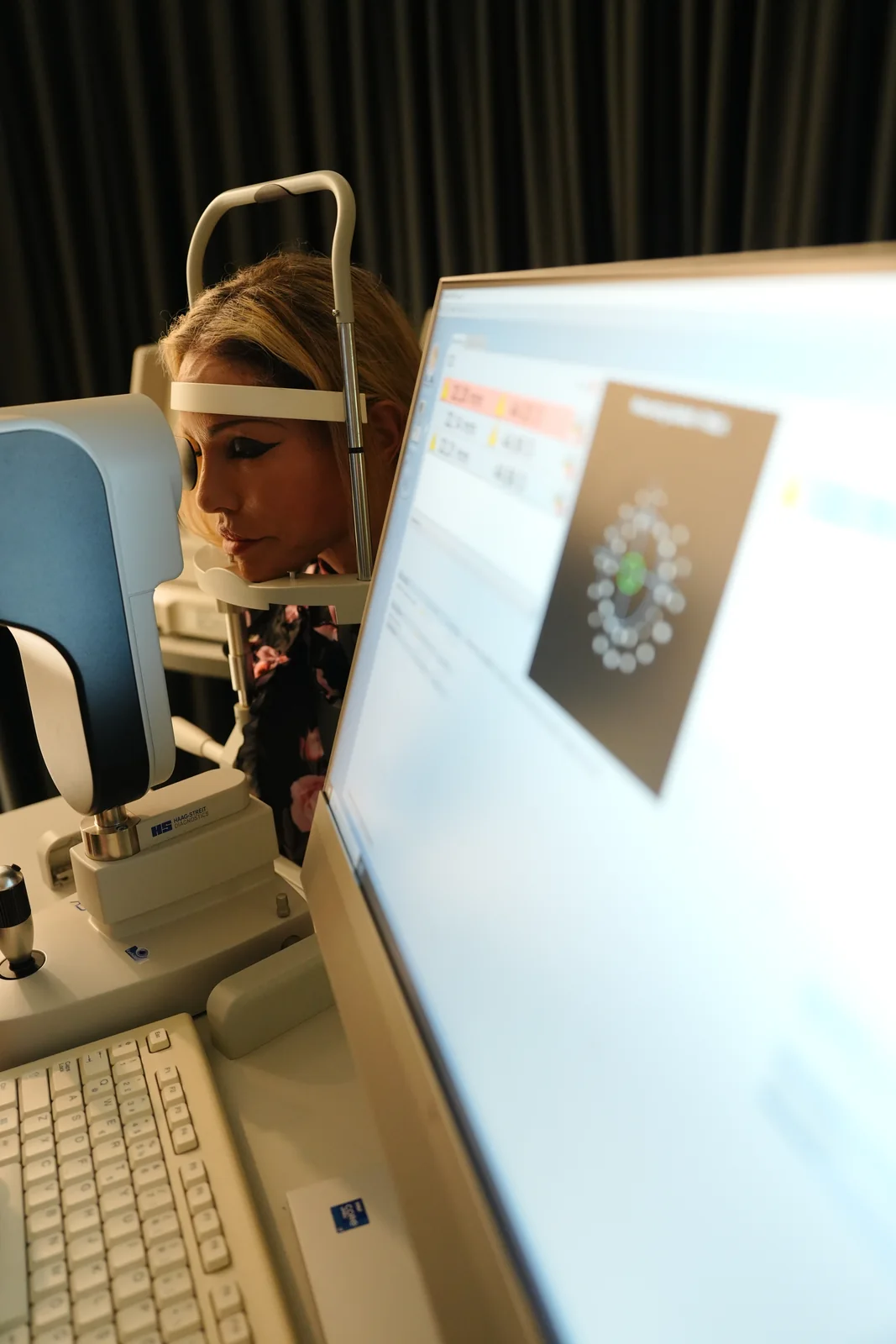

Femto LASIK creates and lifts a flap on the cornea, while SMILE removes a small piece of corneal tissue through a much smaller incision without creating a flap. Femto LASIK suits myopia, hyperopia and astigmatism, whereas SMILE is used only for myopia and astigmatism; your examination determines which is right for you.
Written by Op. Dr. Anıl Kaya
What Is the Short Answer in the Femto LASIK vs SMILE Comparison?
Femto LASIK and SMILE (KLEx) are the two laser techniques most often chosen today. Femto LASIK creates a flap on the cornea, lifts it for treatment, then repositions it afterwards; SMILE works through a much smaller incision, removing tissue from inside the cornea with no flap. This can affect dry eye risk and how the eye feels in the first few days. Which technique suits you depends on your corneal structure and refractive error, and SMILE is only used for myopia and astigmatism. The final decision is made at your examination; both are quick, outpatient procedures.
What Is Femto LASIK?
In Femto LASIK, a femtosecond laser creates a thin flap on the cornea's surface, lifted so the laser can treat the inner layer, then repositioned at the end. The computer-controlled laser cuts the flap to a pre-planned thickness, and it settles back into place without stitches. Femto LASIK can be considered for myopia, hyperopia and astigmatism alike. The eye should not be knocked or rubbed in the early period, and protective eyewear is recommended for the first few days.
What Is SMILE?
In SMILE, a femtosecond laser shapes a lens-like piece of tissue (a lenticule) inside the cornea, removed through a small incision just a few millimetres wide, with no flap created. Because the incision is so small, most of the corneal surface stays largely untouched. Clinically, SMILE is used only for myopia and astigmatism, and is not an option for hyperopia. Protective eyewear is still recommended afterwards; for some patients, the small incision is an advantage when returning to daily activities.
What Is the Main Difference Between Femto LASIK and SMILE?
In Femto LASIK a wide flap is opened and closed again, whereas SMILE uses a much smaller incision with no flap; because fewer corneal nerves are cut, this can affect dry eye symptoms for some patients. The difference also determines which method suits which refractive error — for hyperopia, the choice narrows to Femto LASIK. Protective drops are prescribed after both procedures, and avoiding any knock to the eye early on is advised for both; SMILE's smaller incision can ease this somewhat. Mild sensitivity around lights at night can occur with either method in the first few weeks and usually fades. The incision or flap size is roughly 9 mm for Femto LASIK and around 3 mm for SMILE; the diagram below shows this difference.
How different is the incision or flap size?
How Do Femto LASIK and SMILE Compare, Criterion by Criterion?
The table below summarises six key differences between Femto LASIK and SMILE. The method marked under each criterion generally comes to the fore there; the final decision still depends on the refractive error, corneal structure and dry eye history. No tick means one method is absolutely superior — it only reflects a general tendency.
| Femto LASIK | SMILE | |
|---|---|---|
| No flap is created | — | ✓ |
| Smaller incision/flap area | — | ✓ |
| Can also be used for hyperopia | ✓ | — |
| Generally favourable for those prone to dry eye | — | ✓ |
| Clear vision emerges within the first day | ✓ | ✓ |
| Fewer incision-related restrictions for contact sports | — | ✓ |
Who Is Femto LASIK Suitable For in the Femto LASIK vs SMILE Comparison?
Femto LASIK may be preferred for patients with hyperopia, or those for whom a flap-based method suits. Since SMILE is not an option for hyperopia, assessment proceeds directly through Femto LASIK. It may also suit patients with sufficient corneal thickness for a flap-based method, including those with previous dry eye who cannot have SMILE because of hyperopia. The first check-up after Femto LASIK is usually the next day, confirming the flap sits correctly.
Who Is SMILE Suitable For in the Femto LASIK vs SMILE Comparison?
SMILE can be considered for patients with myopia and/or astigmatism who, due to a tendency towards dry eye, prefer a less invasive option, and for those who want a smaller incision and take part in contact sports. SMILE is not an option for hyperopia. For myopic or astigmatic patients whose work or social life makes a quick return to visual comfort important, SMILE can stand out for this reason too. The first check-up after SMILE is also usually the next day; the small incision tends to simplify follow-up.
How Does the Doctor Choose Between Femto LASIK and SMILE?
Op. Dr. Anıl Kaya, an eye surgeon (ophthalmologist), decides which method suits by assessing the refractive error, corneal thickness, dry eye history and the patient's expectations together. Refractive error type is the first deciding factor: hyperopia rules out SMILE, while myopia or astigmatism means corneal structure and dry eye history are weighed together. The patient is then told the date of the first check-up and what to watch for during recovery — protective eyewear, prescribed drops, and avoiding any knock to the eye. Hyperopia sends the decision straight to Femto LASIK; myopia or astigmatism brings corneal thickness, dry eye history and sporting or occupational needs into the assessment.
How does the doctor decide between Femto LASIK and SMILE?
Which Is More Suitable for Me: Femto LASIK or SMILE?
To clarify which method might suit you, review the decision-support information on which laser method is right for you, then arrange a laser suitability examination. Your refractive error type is the first step; that, together with the myopia, hyperopia and astigmatism pages and an examination, gives a clearer picture. This page only summarises general tendencies — which method suits you becomes clear from the measurements at your examination. Both methods aim for a lasting solution, reducing dependence on glasses or contact lenses; the difference lies in which refractive error each treats and the incision size.
If you have hyperopia
As SMILE is not used clinically for hyperopia, assessment proceeds directly through Femto LASIK.
If you are prone to dry eye
SMILE's smaller incision affects corneal nerves comparatively less.
If you take part in contact sports
SMILE's smaller incision can somewhat ease restrictions in this respect.
Frequently Asked Questions
Does Femto LASIK or SMILE cause less dry eye?
In some patients, SMILE's smaller incision may cause less dry eye, but this varies from person to person.
Which method is suitable for hyperopia?
As SMILE is not used clinically for hyperopia, Femto LASIK is the option considered.
Is there a difference in recovery time between the two?
Recovery is generally quick with both methods; the exact time varies from person to person.
Is the incision in Femto LASIK also small?
No — Femto LASIK involves a wider flap compared with SMILE, where the incision is only a few millimetres.
Which method is considered for hyperopia?
As SMILE is not used clinically for hyperopia, Femto LASIK is the option considered.
References
- Comparison of 9.0 and 9.2 mm Flap Diameter Options of Femtosecond Laser In-Situ Keratomileusis for Hypermetropia and Hypermetropic Astigmatism — Journal of Ophthalmology (PMC), 2019
- Matched comparison of corneal higher order aberrations induced by SMILE to femtosecond assisted LASIK and to PRK in correcting moderate and high myopia: 3.00mm vs. 6.00mm — BMC Ophthalmology (PMC), 2021
Appointment
To clarify which method may suit you, request an appointment through the contact page and then arrange a laser suitability examination. Sharing your current glasses prescription and previous eye examination records at your appointment speeds up the initial assessment. You can get in touch via the phone number or form on the contact page.
Find the Right Path for You
There are many different conditions and options in this area — browse by topic below, or answer a few questions to see the step closest to your situation.
Explore by Topic
The Basics
4 pagesDiagnosis & Methods
1 pageComparisons
3 pagesDecision Support
1 pageFind What Suits You
Laser Eye Surgery RoadmapA few questions, the right next step for you

Ophthalmologist · Kartal, Istanbul
Why Op. Dr. Anıl Kaya?
Related Pages
Would you like to contact the doctor with a Laser assessment tailored to you?
There are two ways. If you would like the doctor to know your situation before replying, complete the Laser Roadmap first; if your question is short, write directly. Both reach the same team.
Your age and a short sentence are enough; no medical terms needed. What you write is only sent when you send it; this page stores no information.