
What Is Hyperopia?
In hyperopia, light focuses behind the retina, making close objects hard to see clearly. See the causes and when laser is an option. Check your suitability in Istanbul.
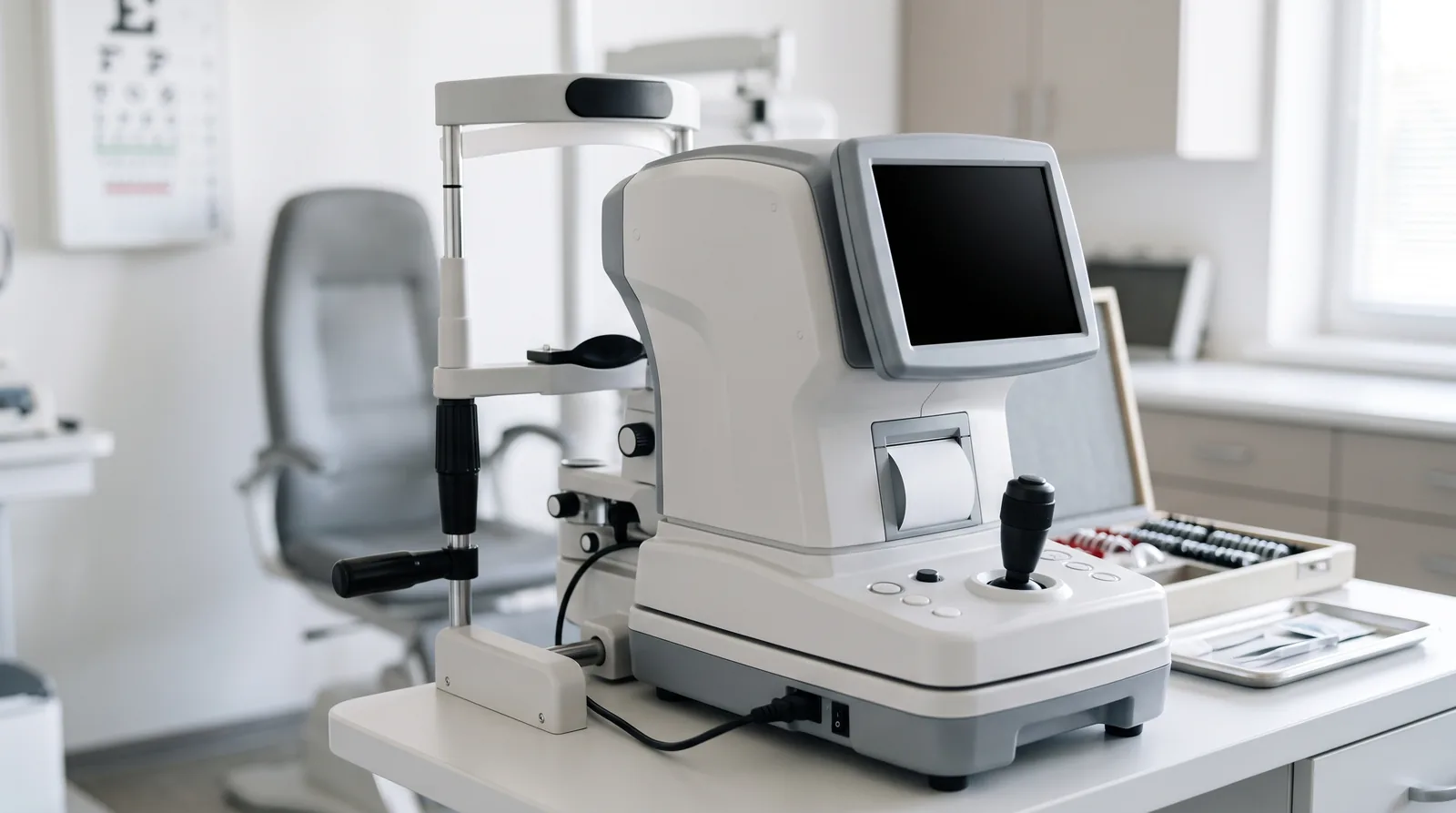

Hyperopia is a refractive error in which light entering the eye focuses behind the retina, making it harder to bring nearby objects into sharp focus. It develops when the eyeball is shorter than average or the cornea and lens do not bend light strongly enough, and mild cases can be partly self-compensated by the eye.
Written by Op. Dr. Anıl Kaya
What Is Hyperopia?
Hyperopia (long-sightedness) is a refractive error in which the eye struggles to focus on nearby objects, because the image forms behind the retina rather than on it. Mild degrees can be compensated for by the eye itself, but moderate and high degrees can affect both near and distance vision. Treatment starts with glasses or contact lenses, and laser surgery is considered once the prescription is stable. The treatment decision depends on the degree of hyperopia and the patient's complaints.
Quick Facts
Hyperopia shows itself as difficulty focusing at near distance; it can go unnoticed in children because the eye's lens can compensate to some extent. Treatment options are glasses, contact lenses and laser surgery, managed by an ophthalmologist. Moderate to high degrees missed early on can still be caught through regular eye examinations. Severity can range from mild to high.
How Does Hyperopia Develop?
In hyperopia the eyeball may be shorter than normal, or the cornea and lens may not bend light enough, so light rays are still converging when they reach the retina. In low degrees, the lens's accommodation can compensate for this, though the effort can lead to eye strain over time. The diagram below shows, in a simplified cross-section, that light rays have not yet crossed by the time they reach the retina, with the theoretical crossing point lying behind it.
Where Does Light Focus in Hyperopia?
What Are the Symptoms of Hyperopia?
Blurring while reading or using a screen up close, eye strain, headaches and sometimes a slight loss of clarity at distance can occur. In higher degrees, blurred distance vision may also be present. None of these symptoms is specific to hyperopia alone; a clear distinction is only possible through refraction and accommodation testing at an eye examination.
Blurred near vision
Loss of sharpness while reading or using a screen is the most commonly reported symptom.
Eye strain and headaches
The eye's constant compensating effort can leave it feeling tired, particularly by the end of the day.
Occasional mild loss of distance clarity
In higher degrees, blurred distance vision may also be present.
May go unnoticed in children
Because the eye's lens can compensate, symptoms may be delayed, which is why regular eye examinations matter.
What Causes Hyperopia?
The most common cause of hyperopia is an eyeball whose front-to-back axis is shorter than normal, so light rays try to focus before reaching the retina and the image forms at a virtual point behind it. A flatter-than-normal corneal curve, or insufficient lens power, can also reduce focusing power and lead to hyperopia. Genetic predisposition plays a role too; children with a family history of hyperopia may be more likely to develop a similar refractive error. Mild congenital hyperopia can partly lessen during childhood as the eyeball grows, so a single measurement in a young child does not always match the prescription that will remain later, and regular follow-up is advised. Which of these factors predominates is determined by the measurements taken at the examination.
How Much Does Each Cause Contribute to Hyperopia?
When Should You See a Doctor?
An eye examination is advisable if you have persistent eye strain, headaches or blurred near vision, especially if it affects daily work. In children, unnoticed hyperopia can sometimes set the stage for lazy eye (amblyopia), so early examination matters. Cases of hyperopia together with a squint (strabismus) in children should also be assessed without delay. Sudden changes in vision should likewise be assessed promptly.
How Is Hyperopia Diagnosed?
Diagnosis is made through visual acuity testing and refraction measurement; some additional tests may also assess the lens's focusing power. A measurement taken with the lens's focusing power temporarily switched off by eye drops (cycloplegic refraction) gives a more reliable reading of the true prescription, particularly in children. If laser treatment is being considered, corneal thickness and structure are also assessed, as part of a laser suitability assessment; these measurements are quick and cause no discomfort.
In What Order Is Hyperopia Diagnosed?
Does Hyperopia Need Treatment?
Low-degree hyperopia may cause no noticeable symptoms in some patients, but when moderate to high degrees go untreated, persistent eye strain and reduced day-to-day function can follow. In children, untreated high hyperopia can raise the risk of lazy eye. Provided no other eye condition is present, regular check-ups and an appropriate corrective method are usually enough. Early correction matters particularly when a squint is also present, to help prevent lazy eye.
What Are the Treatment Options for Hyperopia?
The first step in treatment is glasses or contact lenses. Once the prescription is stable, laser methods such as TransPRK (no-touch PRK) or Femto LASIK can be considered; SMILE (KLEx) is not used for hyperopia. Which choice suits a patient depends on age, prescription stability and personal preference. Laser surgery is not usually recommended before the prescription is stable, so follow-up matters, particularly in younger patients.
Glasses
The first step, suitable at any age and free of surgery.
Contact lenses
An option for patients who want a wider field of view than glasses provide.
TransPRK / Femto LASIK
Laser methods considered once the prescription is stable; SMILE is not used for hyperopia.
Frequently Asked Questions
Does hyperopia resolve on its own?
No. Low-degree hyperopia can be partly compensated for by the eye's own focusing ability, but it does not resolve permanently on its own.
Is SMILE used for hyperopia?
No. SMILE is not used clinically for hyperopia; TransPRK or Femto LASIK are considered instead.
Is hyperopia dangerous in children?
Untreated high-degree hyperopia can raise the risk of lazy eye (amblyopia) in children, which is why early examination matters.
Does hyperopia increase with age?
Hyperopia itself is different from presbyopia, but as the eye's focusing ability declines with age, mild hyperopia that previously went unnoticed can become more noticeable.
Can hyperopia in children improve without glasses?
Mild congenital hyperopia can lessen somewhat as the eyeball grows during childhood, but this varies from person to person, so regular follow-up is still needed.
Related Reading
Myopia (short-sightedness) and astigmatism are two other common refractive errors; astigmatism can occur together with hyperopia in some patients. Which refractive error predominates in your case becomes clear through measurements at an examination. Presbyopia is a separate condition, arising through a different mechanism with age, independent of hyperopia.
Which Treatment Suits Which Patient in Hyperopia?
Whether TransPRK or Femto LASIK suits hyperopia better depends on corneal thickness and structure; a fuller decision-support guide on this is presented separately. TransPRK may be favoured when corneal thickness is borderline, while Femto LASIK may be considered when faster recovery is a priority; SMILE is not offered for hyperopia. This decision is personalised at the examination.
References
- Farsightedness: What Is Hyperopia? — American Academy of Ophthalmology (AAO), 2025
Book an Appointment
Questions about hyperopia can be discussed at an examination with Op. Dr. Anil Kaya (eye surgeon/ophthalmologist); the contact page can be used to request an appointment. Your current prescription, corneal structure, complaints and eye health history are all noted and assessed at the examination.
Find the Right Path for You
There are many different conditions and options in this area — browse by topic below, or answer a few questions to see the step closest to your situation.
Explore by Topic
The Basics
4 pagesDiagnosis & Methods
1 pageComparisons
3 pagesDecision Support
1 pageFind What Suits You
Laser Eye Surgery RoadmapA few questions, the right next step for you

Ophthalmologist · Kartal, Istanbul
Why Op. Dr. Anıl Kaya?
Related Pages
Would you like to contact the doctor with a Laser assessment tailored to you?
There are two ways. If you would like the doctor to know your situation before replying, complete the Laser Roadmap first; if your question is short, write directly. Both reach the same team.
Your age and a short sentence are enough; no medical terms needed. What you write is only sent when you send it; this page stores no information.