
How Is Glaucoma Treated?
Glaucoma treatment lowers eye pressure to slow optic nerve damage: drops first, then laser, and surgery in advanced cases. Check which step suits you in Istanbul.
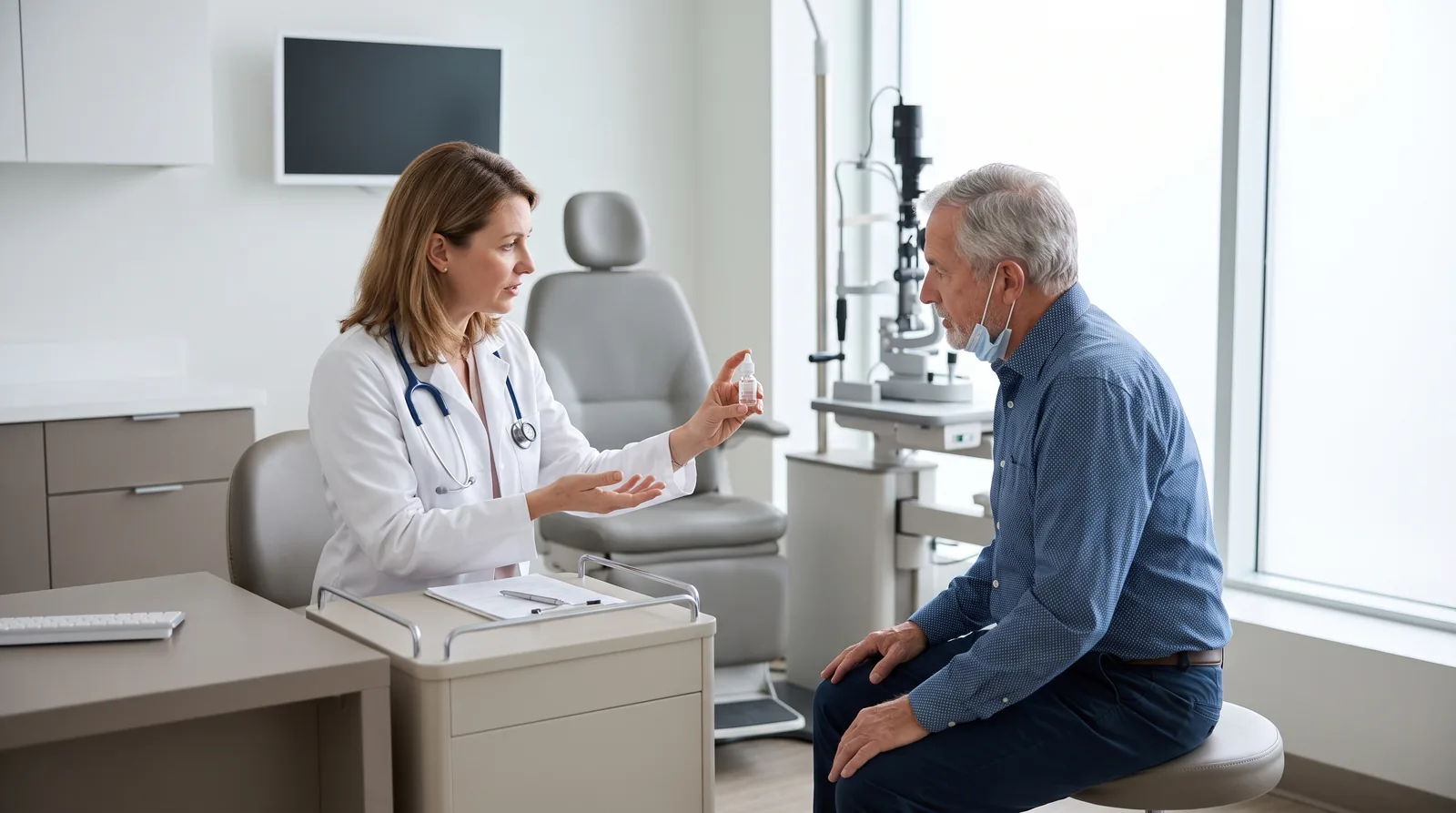

Glaucoma treatment aims to lower intraocular pressure to a target level, slowing or halting further damage to the optic nerve; visual field loss that has already occurred cannot be reversed. Treatment is stepwise: most patients start with pressure-lowering eye drops, then laser if the response is insufficient, and surgery in advanced cases.
Written by Op. Dr. Anıl Kaya
How Is Glaucoma Treated?
The main goal of glaucoma treatment is to lower intraocular pressure (IOP) to a target level, slowing or halting optic nerve damage; visual field loss that has already occurred cannot be reversed with current methods.
Treatment follows a stepwise approach: most patients start with pressure-lowering eye drops; laser is considered if the response is insufficient or drops are unsuitable, and surgery when medication and laser fail to control the disease.
In Istanbul, Op. Dr. Anıl Kaya assesses patients with confirmed or suspected glaucoma from their examination findings and determines the appropriate step; early diagnosis and regular follow-up are the strongest predictors of success.
The Glaucoma Treatment Roadmap: What Happens at Each Step?
Glaucoma treatment is not a single procedure; it is a stepwise journey that begins with diagnosis and continues with lifelong monitoring. The steps below show the order a patient typically follows — see where your own situation currently sits.
Moving to the next step is never automatic: it happens only when the current step fails to lower pressure enough, or a patient cannot maintain it. Most patients go through only one or two steps, not the full pathway.
In what order do the steps of glaucoma treatment progress?
Quick Facts About Glaucoma Treatment
Who it is for: Patients diagnosed with, or monitored for suspected, glaucoma who need lower eye pressure.
Duration: Eye drops are used daily; a laser session is short; surgical duration varies by technique.
Anaesthesia: Topical drops or local anaesthesia usually suffice for laser and surgery.
Follow-up: Regular checks of eye pressure and the optic nerve, at intervals depending on treatment type.
Which Condition Does Glaucoma Treatment Address?
As the name suggests, glaucoma treatment is mainly for patients already diagnosed with glaucoma. The most common type, open-angle glaucoma, usually follows a slow, silent course; the less common angle-closure type can raise pressure rapidly, sometimes suddenly. The approach depends on which type is involved.
In some cases of suspected glaucoma — raised pressure with no optic nerve damage yet detected — preventive treatment may start depending on the risk of progression. More on what glaucoma is, how it develops and its possible symptoms is on our glaucoma page.
Who Is Suitable for Glaucoma Treatment?
Treatment is recommended for patients whose pressure remains above target, who have glaucoma-related optic nerve damage, or who carry a risk of progression. Depending on clinical assessment, preventive treatment may also be considered for a family history of glaucoma, high myopia, or other risk factors.
Disease stage affects how intensive treatment needs to be: early-stage, low-risk disease may be managed with a single drop, while advanced damage or clear progression may call for laser or surgery sooner. Which group applies to you can only be clarified through a comprehensive glaucoma examination.
Who May Not Be Suitable for Glaucoma Treatment?
For people whose pressure stays within normal limits with no evidence of optic nerve damage, regular monitoring is usually enough instead of active treatment, avoiding unnecessary medication. Patients with an allergy or systemic restriction affecting certain drugs may be offered a different step instead of eye drops. The method is assessed individually, so a comprehensive glaucoma examination is required before starting treatment.
What Assessments Are Done Before Glaucoma Treatment?
Before treatment begins, a glaucoma examination assesses intraocular pressure, the optic nerve, and, where needed, the visual field in detail. This confirms the diagnosis and determines the appropriate treatment step. How a glaucoma examination is performed is covered on our glaucoma examination page.
How Are Eye Drops, Laser and Surgery Used in Glaucoma Treatment?
All three steps share the same aim: easing fluid outflow from the eye to bring pressure down to target. Fluid inside the eye (aqueous humour) is produced continuously by the ciliary body, fills the anterior chamber, and drains through the trabecular meshwork at the drainage angle. When this pathway narrows, pressure rises as production continues unchanged; each step eases this outflow by a different route.
Eye drops are used daily to lower pressure; common classes either reduce fluid production or increase drainage through the existing pathway. The choice depends on pressure level, eye structure and other health conditions. Effectiveness is checked at intervals; if one drop is not enough, more may be added or the medication changed.
If the response to drops is insufficient, or drops are unsuitable, laser may be used. A common method in open-angle glaucoma is selective laser trabeculoplasty (SLT), applied to the trabecular tissue at the drainage angle to ease outflow. It is usually quick, outpatient, and can be combined with drops or used first to reduce drop dependence.
When medication and laser fail to control pressure, or disease has advanced, surgery is considered. The shared goal is a new or wider outflow pathway: options include trabeculectomy (a new drainage channel), valved or non-valved tube or shunt implants (a small device directing fluid out of the eye), or techniques within minimally invasive glaucoma surgery (MIGS). The surgeon chooses based on angle structure, response to previous treatment and disease stage.
How does fluid circulate inside the eye, and why does pressure rise?
What Steps Are Followed During Glaucoma Treatment?
All three steps share the same goal: easing fluid outflow to reach target pressure. The steps below show the order a patient may follow; not everyone goes through all of them, and moving on happens only when the previous step is insufficient.
- 1Starting with Eye Drop Treatment. Pressure-lowering eye drops are used regularly every day; effectiveness is checked at set intervals, and if a single drop is not enough, more than one drop or a change of medication may be considered.
- 2Laser Treatment if the Response Is Insufficient. Selective laser trabeculoplasty, commonly used in open-angle glaucoma, is applied to the trabecular tissue at the drainage angle; the procedure is usually quick and can be performed in an outpatient setting.
- 3Surgical Assessment if Medication and Laser Are Insufficient. Options such as trabeculectomy, tube or shunt implants, or minimally invasive glaucoma surgery (MIGS) are assessed according to the angle structure, the response to previous treatments and the stage of the disease.
- 4The Step Is Determined by the Surgeon. Which step is used is assessed individually for each patient according to the current pressure level, the degree of optic nerve damage and the rate of progression.
How Does the Process Continue After Glaucoma Treatment?
With eye drops, regular use and attending follow-up appointments matter; missed doses reduce effectiveness and can give a misleading picture of pressure. Recovery after laser is usually short, and patients return to daily life quickly; the first check looks at whether pressure has moved as expected. Recovery and check-up frequency after surgery vary by technique; pressure is monitored closely early on, and some patients show lower or higher pressure than expected, needing adjustment.
Whatever step a patient is on, the process follows the same four stages: treatment begins, the response is measured, it is compared against target, and either the plan continues or the step is reviewed — a cycle that continues indefinitely by the nature of the disease.
In what order does follow-up progress after treatment?
How Are the Results of Glaucoma Treatment Assessed?
Success is assessed by whether intraocular pressure reaches the target level and stays there over time. In most patients, the right step brings pressure under control and preserves existing visual function. However, visual field loss that has already occurred is not reversed; success means halting or slowing progression, not improvement.
This is judged not from a single visit but by comparing measurements over time: pressure is measured regularly, the optic nerve reassessed with OCT and, where needed, the visual field with perimetry. Treatment is successful when pressure stays at target and no new optic nerve change is found against previous records; otherwise, the step is reviewed.
What Are the Limits of Glaucoma Treatment?
Glaucoma treatment does not reverse vision loss; it only slows or halts progression, so starting early affects the outcome. Not every patient responds equally; some find pressure control difficult and need a change of step.
Eye drop effectiveness falls if regular use is not maintained, and pressure control with laser or surgery may also not last — some patients need further treatment or a repeat procedure over time. Glaucoma treatment is more realistically a long-term process of treatment and follow-up than a one-off procedure.
What Are the Risks and Side Effects of Glaucoma Treatment?
Eye drops can cause local effects such as redness, stinging or eyelash growth, and some also have systemic effects — discuss your general health with your doctor. Laser can cause a temporary pressure rise or mild inflammation. Surgery carries the risks of any procedure: infection, bleeding, or a pressure drop that is smaller or larger than expected. Frequency and severity vary between patients; your individual risk is assessed in detail beforehand.
If you notice a side effect, report it to your doctor rather than managing it yourself — stopping eye drops on your own because of irritation can cause loss of pressure control. Any change of dose or method should follow assessment at examination.
What Is the Doctor's Approach to Glaucoma Treatment?
Op. Dr. Anıl Kaya takes a stepwise, patient-specific approach: a comprehensive glaucoma examination establishes disease stage before treatment, and pressure and optic nerve status are monitored with regular checks throughout. The choice of step is not based on one measurement alone — age, daily routine, capacity to keep up with drop use, and the rate of progression are weighed together, aiming for sustainable pressure control at the lowest risk. More on the doctor and his expertise is on our doctor page.
What Are the Alternative Options in Glaucoma Treatment?
In glaucoma, 'alternative' usually means a different step within the same disease rather than a treatment for a different condition: laser is considered when drops are insufficient, and surgery when laser proves insufficient. Some patients with early-stage, low-risk disease may be monitored rather than actively treated. Which step suits you is determined by your doctor from your examination findings.
Frequently Asked Questions
Are glaucoma eye drops used for life?
In most patients, eye drop treatment continues long term, sometimes for life; however, this varies from patient to patient, and the treatment plan is updated as needed through regular check-ups.
Is laser treatment for glaucoma painful?
Laser treatment is usually performed with topical anaesthetic drops, and most patients do not feel significant pain; mild discomfort may occur after the procedure.
Is glaucoma surgery a definitive solution?
No. No glaucoma treatment, including surgery, reverses vision loss or eliminates the disease; the aim is to control intraocular pressure and slow progression. Regular follow-up is still needed after surgery.
Does visual field loss stop once treatment starts?
Bringing intraocular pressure under control with appropriate treatment slows the rate of visual field loss in most patients; however, the outcome depends on the stage of the disease at the start and the response to treatment.
Can laser be used directly instead of eye drops?
In some patients, laser treatment may be chosen as the first step; this can happen when eye drops are not suitable, or when the doctor's clinical assessment favours laser. The decision is made individually, based on examination findings.
Can laser treatment be repeated?
Some laser methods can be repeated when needed; if the effect decreases over time, the doctor may consider repeating the same laser treatment or moving to a different step.
If I have surgery, can I stop using eye drops?
In some patients, the need for eye drops decreases or disappears after surgery, but this does not happen in every case; some patients continue on a lower dose of drops even after surgery. This is determined by intraocular pressure at follow-up examinations.
Does glaucoma treatment sharpen my vision or correct my glasses prescription?
No, glaucoma treatment does not correct refractive error (your glasses prescription); its aim is to control intraocular pressure and stop the progression of optic nerve damage. Visual field loss that has already occurred is not reversed by treatment either.
Related Content
For more information on glaucoma, the glaucoma examination and peripheral vision loss, you can explore our related pages.
When Can You Return to Daily Life After Glaucoma Treatment?
Eye drops do not restrict daily life; patients continue work and social activities the same day. After laser, a short rest is usually enough and most return to daily activities the next day. With surgery, recovery and restrictions — such as avoiding heavy lifting or pressure on the eye — vary by technique and are explained individually by the surgeon.
References
- Glaucoma Treatment — American Academy of Ophthalmology (AAO), 2020
- Glaucoma: Diagnosis and Management (NG81) — NICE (National Institute for Health and Care Excellence), 2022
Book an Appointment
If you have been diagnosed with glaucoma, or told your eye pressure is raised, book an appointment with Op. Dr. Anıl Kaya in Istanbul via our contact page to discuss your treatment options.
Find the Right Path for You
There are many different conditions and options in this area — browse by topic below, or answer a few questions to see the step closest to your situation.
Explore by Topic
Find What Suits You
Glaucoma RoadmapA few questions, the right next step for you
Related Pages
How Is a Glaucoma Test Performed?
Contact and Appointments
What Is a Full Eye Examination, and What Does It Check?
What Is a Routine Eye Examination, and How Often Should You Have One?
Cataract Symptoms, Surgery and Intraocular Lens (IOL) Options
Retinal Diseases and Treatment Options
Laser Eye Surgery
Medical Aesthetics Treatments
Would you like to contact the doctor with a Glokom assessment tailored to you?
There are two ways. If you would like the doctor to know your situation before replying, complete the Glokom Roadmap first; if your question is short, write directly. Both reach the same team.
Your age and a short sentence are enough; no medical terms needed. What you write is only sent when you send it; this page stores no information.