
How Is Cataract Surgery Performed?
Phacoemulsification removes the clouded lens and an intraocular lens replaces it, usually as a day case under local anaesthesia. See how the process works in Istanbul.


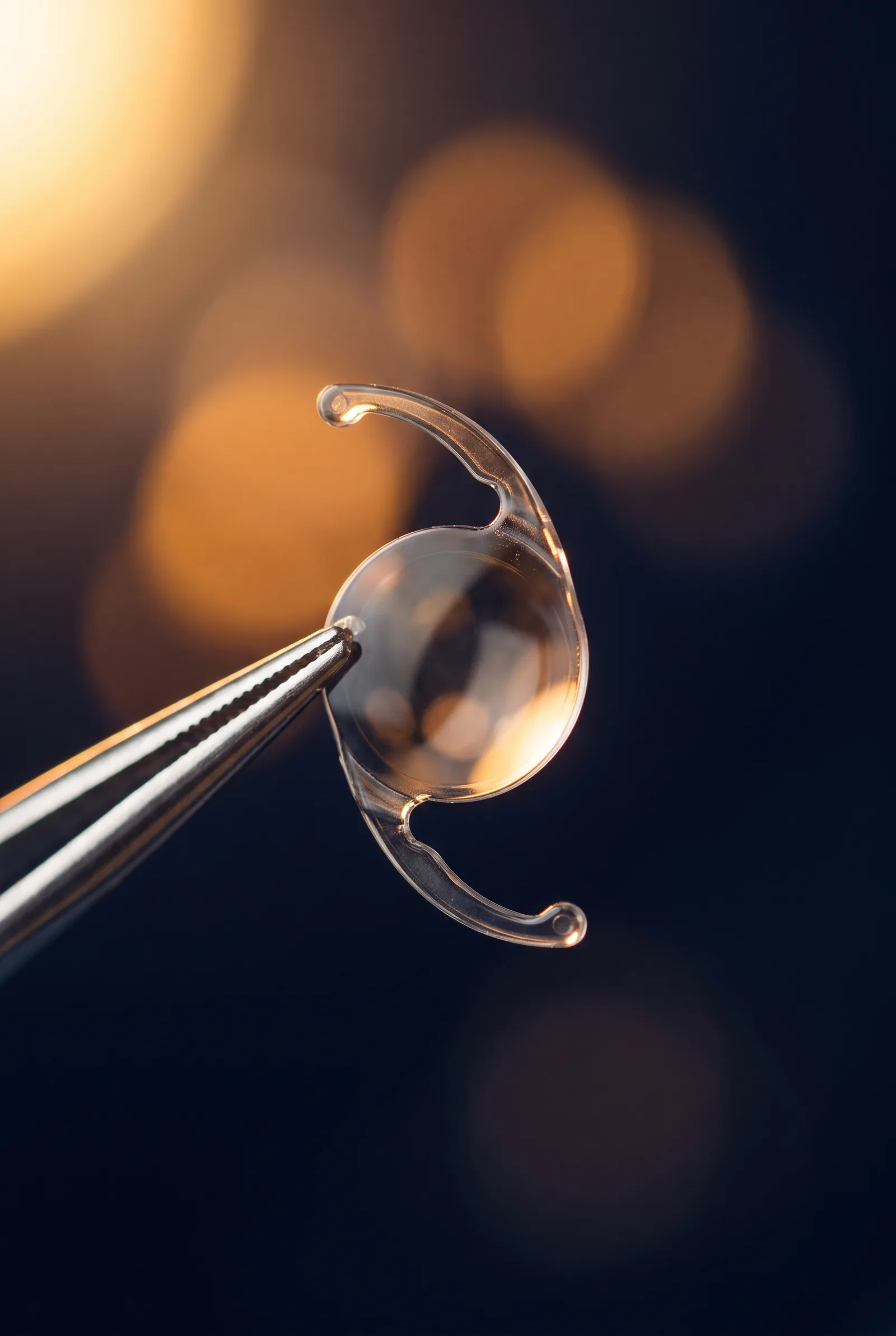
Cataract surgery removes the eye's clouded natural lens and replaces it with an artificial intraocular lens. The most common technique, phacoemulsification, breaks up the lens with ultrasound energy and removes it through a tiny incision. It is usually performed as a day case under local anaesthesia, and most patients go home the same day.
Written by Op. Dr. Anıl Kaya
What Is Cataract Surgery?
Cataract surgery removes the eye's clouded natural lens and replaces it with an artificial intraocular lens. The most common technique, phacoemulsification, breaks up the lens with ultrasound energy and clears it through a small incision, usually as a day case. In Istanbul, Op. Dr. Anıl Kaya first examines the eye in detail, then agrees with the patient on the timing of surgery and the most suitable intraocular lens.
What Changes in Daily Life Before and After Cataract Surgery?
As a cataract progresses, everyday tasks such as reading, driving or recognising a familiar face can become harder; haloes and glare around oncoming headlights are often more noticeable at night.
After surgery, most patients see a marked improvement in clarity, with colours more vivid and contrast sharper — a change that can make a real difference to everyday independence.
Cataract Surgery at a Glance
Duration: treating one eye is usually quick, typically around 15 to 30 minutes.
Anaesthesia: usually drops or local anaesthesia; general anaesthesia is rarely needed.
Hospital stay: a day case, with no overnight stay.
Recovery: visual clarity starts improving within days, while full recovery can take a few weeks; timing varies and becomes clearer after examination.
When Is Cataract Surgery Needed?
Cataract surgery is carried out once the natural lens has lost enough clarity to noticeably affect daily life. General information on cataracts, symptoms and timing is covered on a separate page; this page focuses on the surgical process itself.
Who Is Suitable for Cataract Surgery?
Patients with cataract-related blurred vision, reduced night-time contrast or light sensitivity that noticeably affects daily life are generally considered for surgery. The decision is not based on lens clouding alone; it weighs the difficulty the patient experiences day to day together with the examination findings.
For drivers, falling below the visual acuity required for a licence can also bring the decision forward; this is assessed separately at examination.
Who May Not Be Suitable for Cataract Surgery?
Surgery may need to be postponed temporarily for an active eye infection, uncontrolled raised eye pressure, or a general health condition unsuitable for surgery; once treated, surgery is reconsidered.
When a cataract is at a very early stage and not yet affecting daily life, the doctor may prefer regular follow-up over immediate surgery; no medication is known to be effective in its place, so options should be discussed with the doctor.
How Is the Pre-Surgery Assessment for Cataract Surgery Carried Out?
Before the decision to operate, a detailed examination covers eye pressure, corneal structure, the back of the eye and biometric measurements used to calculate the intraocular lens power. This is part of the general eye examination and is important for the correct lens power; the data gathered forms the basis for safe surgical planning and the right choice of lens.
Assessment Process
What Are the Anaesthesia Options for Cataract Surgery?
Most cataract operations use only anaesthetic eye drops (topical anaesthesia); no injection is given, and the patient stays awake throughout.
In some patients, a small local anaesthetic injection around the eye is preferred instead, allowing tighter control of eye movement during surgery. General anaesthesia is rarely needed, only when a patient cannot cooperate during the procedure. The method used is agreed with the patient during the pre-surgery assessment.
How Is Cataract Surgery Performed Step by Step?
Local anaesthesia is given with eye drops. A small incision at the edge of the cornea allows the clouded lens to be cleared with ultrasound energy, and a foldable lens is inserted through it, healing without stitches. The patient goes home the same day after a short observation.
- 1Local Anaesthesia. Local anaesthesia is provided with eye drops.
- 2Small Incision. A very small incision is made at the edge of the cornea, and the clouded lens is cleared using ultrasound energy.
- 3Placement of the New Lens. A foldable intraocular lens is inserted through the same incision; the incision usually heals without stitches.
- 4Same-Day Discharge. After a short period of observation, the patient can go home the same day.
What Happens on the Day of Cataract Surgery?
The patient usually arrives at the clinic/hospital a set time beforehand; pupil-dilating and anaesthetic drops are given in advance, followed by a short preparation and a final briefing before entering theatre.
During the procedure the patient is awake but feels no pain, since the eye is numbed with drops; a slight sensation of pressure or light is normal. Afterwards, a short observation follows and the patient usually goes home the same day with a companion; driving is not advised straight away.
How Does Recovery Progress After Cataract Surgery?
In the first few days, mild stinging, watering or light sensitivity may occur and usually settles quickly. Prescribed drops should be used as directed, and follow-up appointments kept.
Clarity improves markedly from the first days, though full stabilisation can take a few weeks.
When Is the Second Eye Operated On in Cataract Surgery?
Cataracts usually affect both eyes, though not always equally. The eyes are generally operated on in separate sessions; timing for the second eye follows once the first eye's recovery and clarity are assessed.
The interval between operations varies and is planned with the doctor, based on recovery speed and the patient's daily visual needs.
What Are the Results of Cataract Surgery?
Most patients see a noticeable improvement in visual quality; blurred vision, light sensitivity and faded colours generally ease. How lasting this is, and how far glasses dependence falls, depends on the lens type and the eye's structure.
Because the lens stays in place and a cataract cannot recur in it, the operation is generally one-off for that eye; posterior capsule opacification, which can develop over time, is treated separately with a short laser procedure, not a new operation.
What Are the Limits and Realistic Expectations of Cataract Surgery?
Cataract surgery does not give every patient the same result; with other eye conditions present, such as advanced retinal or optic nerve disease, the improvement may be limited.
In some patients, posterior capsule opacification develops months or years afterwards and is treated with a separate, short laser procedure. Although the lens power calculation is done carefully, some patients are left with a small residual prescription.
How far glasses dependence falls depends on the lens chosen; a monofocal lens, focusing at a single distance (usually distance), still needs glasses for near tasks — a natural feature of that lens, not a complication.
What Are the Risks and Complications of Cataract Surgery?
As with any surgery, cataract surgery carries risks such as infection, bleeding, a temporary rise in eye pressure, or slower-than-expected healing; these are uncommon but not zero, and are explained in detail during the pre-surgery assessment. Using the antibiotic eye drops prescribed after surgery as directed, and following the doctor's hygiene guidance — not rubbing the eye, avoiding unclean environments — helps reduce infection risk.
How Often Do These Risks Occur?
How Does Recovery Progress Day by Day After Cataract Surgery?
The timeline below summarises the general course of recovery; the process varies from patient to patient.
Recovery Timeline
What Are the Most Common Misconceptions About Cataract Surgery?
A cataract is sometimes pictured as a film on the surface of the eye; in fact it is the eye's own lens losing clarity from the inside, not a deposit that can be wiped away.
Another misconception is that delaying surgery lets the lens 'ripen', making the operation easier; the decision is based on how far the cataract affects daily life, and delay has no known benefit.
Cataract surgery is also often assumed to use a laser; the standard procedure uses ultrasound energy, called phacoemulsification. Laser vision correction (LASIK, PRK, SMILE) corrects refractive errors, not cataracts.
Which Symptoms After Surgery Need Immediate Medical Attention?
Beyond the mild stinging, watering and light sensitivity expected after surgery, sudden marked vision loss, severe eye pain, increasing redness, or a dark shadow across the field of vision are not part of normal recovery.
If any of these appear, contact the doctor without delay; early assessment allows a complication to be caught and managed in time. A new symptom outside routine follow-up should be reported straight away.
What Is the Doctor's Approach to Cataract Surgery?
When planning surgery, Op. Dr. Anıl Kaya assesses the patient's eye structure together with their daily habits and expectations to guide the choice of intraocular lens. More on the doctor's overall approach is on a separate page.
Is There an Alternative to Cataract Surgery?
There is no medically proven way to treat cataract-related vision loss with medication or drops; the only non-surgical option is regular monitoring.
No other treatment is recommended as a substitute for surgery; what differs is the lens type chosen, covered on separate pages.
Frequently Asked Questions
The questions patients most often ask about cataract surgery are briefly answered below.
Is cataract surgery painful?
Because anaesthetic drops are used during the procedure, most patients feel no significant pain; some mild discomfort can follow afterwards.
When can I drive again after surgery?
This depends on how quickly your vision stabilises, which becomes clearer as your doctor monitors your recovery.
Can a cataract come back?
Because the natural lens has been removed, a cataract cannot recur in that eye; in some patients, however, posterior capsule opacification can develop and is treated with a short laser procedure.
Are both eyes operated on at the same time?
The eyes are usually operated on in separate sessions; the timing is decided by the doctor's assessment.
How long should I avoid driving after cataract surgery?
Driving is not advised on the day of surgery; after that, the length of time depends on how quickly visual clarity stabilises and varies from patient to patient.
What happens if cataract surgery is postponed?
There is no evidence that postponing surgery makes it easier; the decision is based on how far daily life is affected, and there is no known benefit to unnecessary delay.
Is cataract surgery performed with a laser?
No — standard cataract surgery is performed using ultrasound energy in a technique called phacoemulsification; laser vision correction surgery is a different procedure and does not treat cataracts.
Content About Choosing an Intraocular Lens
More on choosing an intraocular lens, comparing lens types and their relationship with presbyopia is on separate pages.
How Do Intraocular Lenses Compare in Cataract Surgery?
A combined table comparing intraocular lens types side by side, plus the most-asked monofocal-versus-trifocal comparison, is available on separate pages.
What Intraocular Lens Technologies Are Used in Cataract Surgery?
More on the monofocal, monofocal plus, EDOF and trifocal lens technologies is available on the relevant pages.
Monofocal
A single focal distance, usually distance vision.
What is a monofocal lens?Monofocal Plus
Distance clarity with a slightly extended intermediate range.
What is a monofocal plus lens?EDOF
An extended, continuous band of focus between distance and intermediate.
What is an EDOF lens?Trifocal
Combined focus at near, intermediate and distance.
What is a trifocal lens?How Does Daily Life Resume After Cataract Surgery?
Most patients return to light everyday activities the day after surgery; rubbing the eye, heavy lifting, swimming or the sea, and dusty or smoky environments should be avoided for as long as the doctor advises.
Returning to driving and work depends on how quickly clarity stabilises, and varies from patient to patient. Desk-based workers usually return within a few days, while physically demanding or dusty/chemical-exposed roles may need longer. Make-up near the eye should also wait for the period the doctor sets.
What Do Before-and-After Results of Cataract Surgery Look Like?
Examples showing the change in visual quality before and after surgery come from patients the doctor has previously followed; results vary, as the outcome depends on the structure of the eye.
References
- Cataract Surgery: Risks, Recovery, Costs — American Academy of Ophthalmology (AAO), 2025
- Posterior Capsule Opacification — American Academy of Ophthalmology (EyeWiki), 2026
Book an Appointment
For a suspected cataract or to plan surgery, book an appointment with Op. Dr. Anıl Kaya in Istanbul.
Find the Right Path for You
There are many different conditions and options in this area — browse by topic below, or answer a few questions to see the step closest to your situation.
Explore by Topic
The Basics
2 pagesDiagnosis & Methods
4 pagesTreatment
1 pageComparisons
2 pagesDecision Support
1 pageFind What Suits You
Cataract RoadmapA few questions, the right next step for you


Ophthalmologist · Kartal, Istanbul
Why Op. Dr. Anıl Kaya?
Related Pages
Cataract Symptoms, Surgery and Intraocular Lens (IOL) Options
What Is a Full Eye Examination, and What Does It Check?
Which Intraocular Lens Is Right for You?
What Is a Monofocal Intraocular Lens?
What Is a Monofocal Plus IOL?
What Is an EDOF Intraocular Lens?
What Is a Trifocal IOL?
Intraocular Lens Types Compared: Monofocal, Monofocal Plus, EDOF and Trifocal
Monofocal or Trifocal Intraocular Lens?
Contact and Appointments
Is Cloudy Vision a Sign of Cataract?
Would you like to contact the doctor with a Cataract assessment tailored to you?
There are two ways. If you would like the doctor to know your situation before replying, complete the Cataract Roadmap first; if your question is short, write directly. Both reach the same team.
Your age and a short sentence are enough; no medical terms needed. What you write is only sent when you send it; this page stores no information.