
Monofocal or Trifocal Intraocular Lens?
Choose monofocal for clear distance vision alone, or trifocal to rely less on glasses near and far if your eye structure allows. Check your suitability in Istanbul.
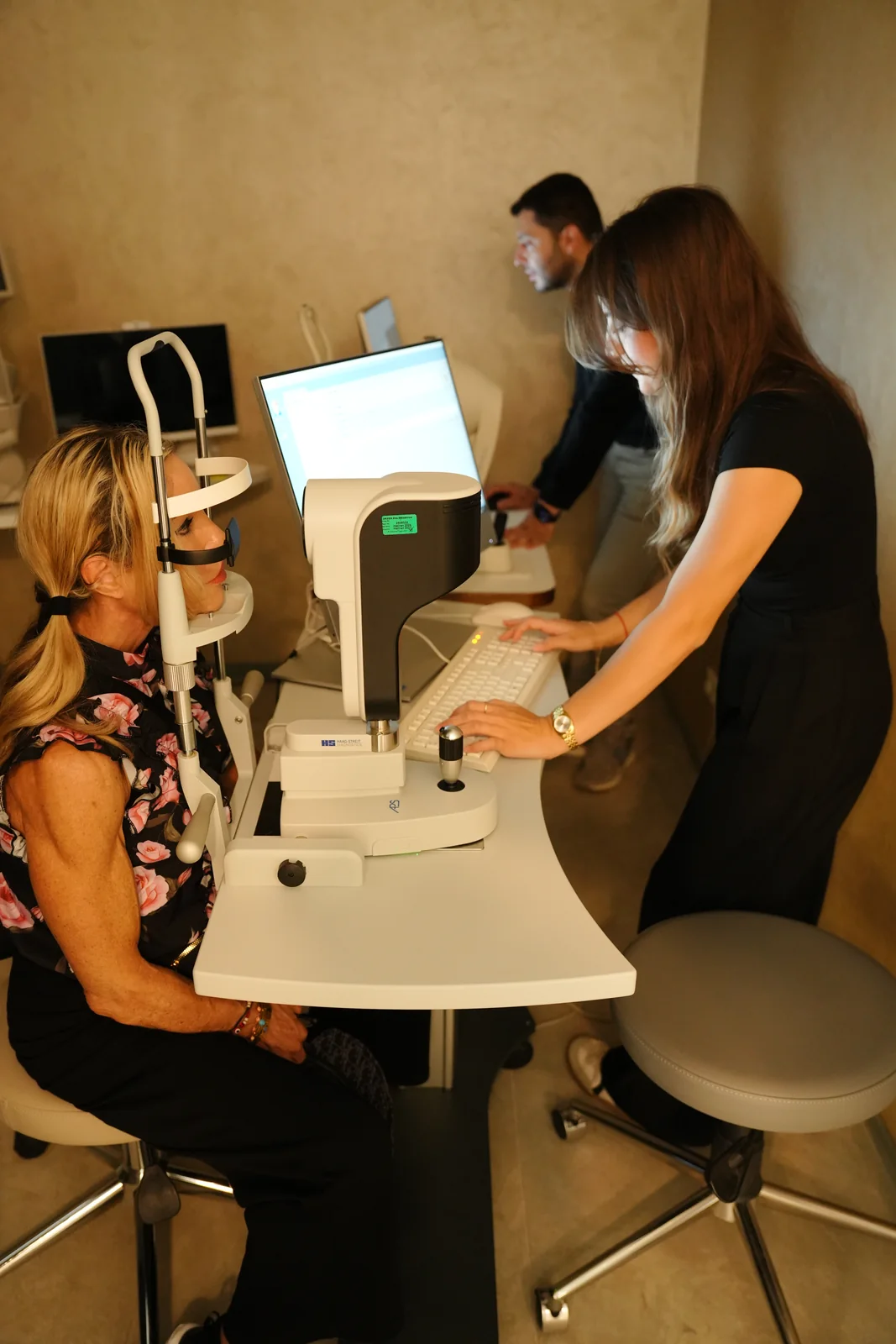

The answer to the monofocal vs trifocal IOL question depends on priorities: a monofocal lens suits those who want the sharpest distance vision alone or whose eyes are not suited to a multifocal lens, while a trifocal lens suits those wanting less glasses dependence at near, intermediate and distance; the choice is confirmed at examination.
Written by Op. Dr. Anıl Kaya
What Is the Short Answer in the Monofocal vs Trifocal Comparison?
In short: a monofocal lens suits patients who want the sharpest distance vision, or whose eyes do not suit a multifocal lens; a trifocal lens suits those wanting less glasses dependence at near, intermediate and distance, if their eyes allow it. The final decision is confirmed at examination.
This is the pairing patients ask about most; monofocal plus and EDOF are covered in a fuller comparison on a separate page.
What Is a Monofocal IOL?
A monofocal IOL is the classic intraocular lens, providing clear vision at a single focal distance, usually distance; reading glasses are generally still needed for near tasks. Cataract surgery is covered on a separate page.
It has the longest track record and widest clinical experience of the four lens types, with a highly predictable outcome.
What Is a Trifocal IOL?
A trifocal IOL is a multifocal lens designed to give clear vision at near, intermediate and distance together, reducing dependence on glasses for most of daily life.
This wider range comes from concentric diffractive rings on the lens surface; the brain gradually learns to select between the three focal points.
How Does the Difference Between Monofocal and Trifocal Feel in Daily Life?
A patient with a monofocal lens sees clearly at a distance but almost always needs reading glasses for near tasks such as reading or a phone screen; some also notice slightly less sharpness at intermediate range, for example on a computer.
A patient with a trifocal lens can usually manage without glasses for most of the day, but night-time haloes and glare around lights can be more noticeable than with a monofocal lens.
What Is the Key Difference Between Monofocal and Trifocal?
The key difference is how many distances the lens can focus on: a monofocal lens gives sharp vision at one distance, usually far, while a trifocal lens serves three - at the cost of slightly more noticeable night haloes and glare.
The visual adjustment period differs too: a monofocal lens needs no extra learning and vision stabilises quickly, while a trifocal lens requires the brain to learn to select between focal points, with a temporary adjustment in the first few weeks. Follow-up needs are similar; the real difference lies in the optical design and expected vision profile.
Contrast sensitivity also differs: a monofocal lens generally gives the highest contrast, while a trifocal lens can reduce it slightly because light splits between three focal points - rarely a problem day to day, but sometimes noticeable in low light.
Where Does Monofocal vs Trifocal Offer an Advantage at Each Distance?
What Does the Monofocal vs Trifocal Comparison Table Show?
The table compares monofocal and trifocal on the same criteria.
| Criterion | Monofocal | Trifocal |
|---|---|---|
| Distance vision sharpness | High | Good |
| Intermediate vision | Limited, with glasses | Good |
| Near vision | With glasses | Good |
| Night haloes/glare risk* | Low | Moderate, more noticeable in some patients |
| Tolerance of eye structure | Wide | More selective |
Who Is a Monofocal Lens Suitable for in the Monofocal vs Trifocal Comparison?
A monofocal lens may be preferred for patients with a condition limiting multifocal lens use, such as irregular astigmatism or advanced fundus disease, or those who want sharp distance vision.
It is also often chosen by night drivers who want to keep the risk of optical side effects as low as possible, given its predictable outcome.
Who Is a Trifocal Lens Suitable for in the Monofocal vs Trifocal Comparison?
A trifocal lens is considered for patients with a suitable eye structure who can accept the possible risk of night haloes and want less dependence on glasses.
This fits patients who read or do close-up work often, and drive little at night.
How Does the Doctor Choose Between Monofocal and Trifocal?
Op. Dr. Anıl Kaya weighs the corneal and intraocular measurements from the examination, other eye conditions and the patient's lifestyle before choosing between a monofocal and a trifocal lens; neither is the single right answer for everyone. The assessment considers corneal topography, pupil size, fundus condition and previous surgery.
How the patient uses different distances day to day - computer work, driving, or reading - is also a practical factor. If a multifocal lens is not suitable, a monofocal or EDOF lens is recommended instead.
What Are the Common Misconceptions in the Monofocal vs Trifocal Comparison?
A trifocal lens can seem like a more advanced monofocal; in fact, they are different designs serving different priorities, and neither replaces the other.
Another misconception is that a monofocal lens is inadequate. For patients whose eye structure does not suit a multifocal lens, or who want sharp distance vision, a monofocal lens can be the most suitable, well-informed choice.
Which One Is Right for Me Between Monofocal and Trifocal?
Which lens suits you depends on your eye structure and priorities; the factors behind lens choice are covered in a separate decision guide, and a table comparing all four lens types is on its own page.
If you are undecided, options such as monofocal plus or EDOF can also be considered if your eyes allow; these are covered on their own pages.
Frequently Asked Questions
Below are the questions most often asked about comparing monofocal and trifocal lenses.
Is a trifocal lens always the better choice?
No. Although it provides vision at more distances, a monofocal lens can be a better choice for patients whose eye structure is not suited to a trifocal design.
Does surgery take longer with a trifocal lens than a monofocal one?
The surgical technique is largely the same; the difference lies mainly in the optical design of the lens that is implanted.
Can a different lens be used in each eye?
In some cases, depending on the doctor's assessment, a different lens strategy can be applied between the two eyes; this is planned on an individual basis.
Does recovery take longer with a trifocal lens than a monofocal one?
Surgical recovery time is largely similar; the difference lies in the visual adaptation, or neuroadaptation, period the brain needs to learn to select between the trifocal lens's three focal points.
What is recommended if a trifocal lens is not suitable?
If the eye structure is not suitable for a trifocal lens, alternatives such as a monofocal, monofocal plus or EDOF lens are considered.
References
- Multifocal versus monofocal intraocular lenses after cataract extraction — Cochrane Database of Systematic Reviews, 2016
- Trifocal Intraocular Lenses — American Academy of Ophthalmology (EyeWiki), 2026
Appointment
Book an appointment with Op. Dr. Anıl Kaya in Istanbul for a tailored assessment of monofocal versus trifocal lenses.
Find the Right Path for You
There are many different conditions and options in this area — browse by topic below, or answer a few questions to see the step closest to your situation.
Explore by Topic
The Basics
2 pagesDiagnosis & Methods
4 pagesTreatment
1 pageComparisons
2 pagesDecision Support
1 pageFind What Suits You
Cataract RoadmapA few questions, the right next step for you



Ophthalmologist · Kartal, Istanbul
Why Op. Dr. Anıl Kaya?
Related Pages
Would you like to contact the doctor with a Cataract assessment tailored to you?
There are two ways. If you would like the doctor to know your situation before replying, complete the Cataract Roadmap first; if your question is short, write directly. Both reach the same team.
Your age and a short sentence are enough; no medical terms needed. What you write is only sent when you send it; this page stores no information.