
What Is TransPRK (No-Touch PRK)?
No-touch TransPRK treats the corneal surface directly with no flap; the surface layer regrows in a few days. See who it suits and book a consultation in Istanbul.
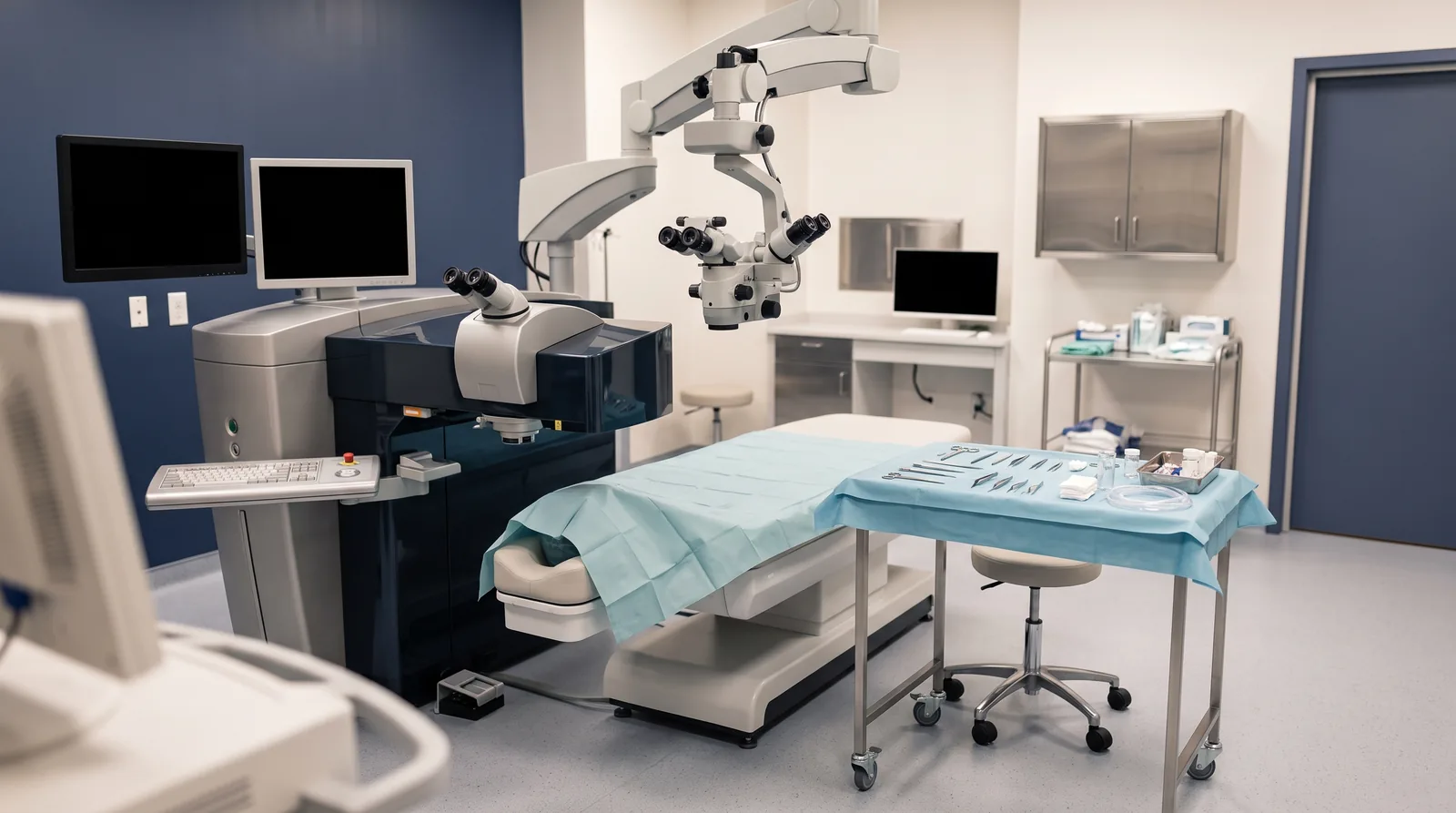

TransPRK (no-touch PRK) is a flapless laser technique that treats the corneal surface directly, without disturbing the epithelium, the eye's outermost surface layer. The epithelium regrows on its own within a few days. Because of this, it is a technique considered for patients with borderline corneal thickness, though exact suitability is confirmed only at assessment.
Written by Op. Dr. Anıl Kaya
What Is TransPRK (No-Touch PRK)?
TransPRK, also known as no-touch PRK, applies the laser directly to the corneal surface without disturbing the epithelium, the cornea's outermost layer. Unlike femtosecond LASIK, no flap is created, so it is considered for patients with borderline corneal thickness. It belongs to the surface-ablation family of laser eye surgery, built on excimer laser technology used for decades. "No-touch" means the epithelium is removed with a separate laser pulse rather than scraped away mechanically, so fewer instruments touch the eye. An amount of tissue, calculated from the refractive error, is reshaped with the excimer laser so light focuses more precisely on the retina. The excimer laser works at an ultraviolet wavelength, vaporising tissue in very thin layers without heating it, keeping heat spread to surrounding tissue limited. Because the laser reaches the corneal surface directly, beneath the epithelium, TransPRK counts among the "surface" techniques — unlike femtosecond LASIK, which opens a flap, TransPRK never does; the epithelium simply regrows on its own.
How does the laser reshape the cornea in TransPRK?
Which Main Treatment Does TransPRK Belong To?
TransPRK is one of three main laser eye surgery techniques, used to correct refractive errors such as myopia (short-sightedness), hyperopia (long-sightedness) and astigmatism. Which refractive errors and patients it fits is considered within the broader laser eye surgery assessment. TransPRK, femtosecond LASIK and SMILE (KLEx) reach the same goal by different routes — the difference lies in how the laser reaches the cornea and how healing unfolds. The right technique is worked out at assessment from corneal thickness, dry eye history and lifestyle. All three aim to reduce dependence on glasses or contact lenses, though the preferred technique varies by refractive error.
Who Is TransPRK Suitable For?
TransPRK may be considered for patients with borderline corneal thickness, or whose occupation or lifestyle carries a higher risk of eye impact. As no flap is created, it carries no flap-related complication risk. Suitability is worked out at assessment from corneal thickness and eye surface health. The profiles below come up most often in TransPRK assessments; final suitability is confirmed only after examination. Corneal thickness, ocular surface health, tear volume and the degree of refractive error together clarify whether TransPRK or another technique fits better, using measurements such as corneal topography and pachymetry rather than a single reading.
Patients with borderline corneal thickness
As TransPRK requires no flap, it is a technique considered for thinner corneas.
Occupations and sports with a higher risk of impact
With no flap present, there is no risk of flap displacement following an impact.
Patients with a history of dry eye
As nerve transection is more limited, this can be a reason some patients are offered TransPRK; it is assessed individually.
Patients able to attend regular follow-up
The healing period involves using prescribed drops and attending follow-up appointments.

How Is TransPRK Performed?
Anaesthetic drops numb the eye beforehand, so no pain is felt. The corneal surface is then reshaped with the excimer laser by an amount calculated for the individual, and a temporary bandage contact lens is fitted to support healing. Treating one eye is quick, usually allowing same-day discharge.
- 1Anaesthetic drops. The surface of the eye is numbed with drops; no pain is felt.
- 2Removing the epithelial layer. The thin, outermost layer of the cornea is gently removed.
- 3Reshaping the tissue with the excimer laser. The corneal surface is reshaped by an amount calculated for the individual.
- 4Bandage contact lens. A temporary, soft contact lens is fitted to support healing.
What Are the Advantages and Limitations of TransPRK?
TransPRK's advantage is that no flap is created, so it carries none of the risks a flap brings — worth considering for a thin cornea or a higher-risk lifestyle. Its limitation is that, because the epithelium must regrow, healing can take a little longer than after femtosecond LASIK, with stinging or sensitivity more noticeable in the first few days. As clear vision is reached gradually, TransPRK may not suit patients expecting very fast results — weighed up at assessment. With no flap, there is no later concern about flap displacement from an eye impact, which can make TransPRK stand out for certain occupations. Against that, clear vision comes in stages while the epithelium regrows — a wait that fast-recovery patients should factor in.
What Is Recovery Like After TransPRK?
Stinging, watering and light sensitivity can appear over the first few days; the doctor's prescribed drops are used throughout. Visual clarity improves gradually and, as the epithelium must regrow, this can take a little longer than after femtosecond LASIK or SMILE. The timeline below shows roughly when healing milestones tend to occur; timing varies from person to person.
How long does recovery take after TransPRK?
What Are the Risks of TransPRK?
As with any surgical procedure, TransPRK carries risks such as infection, delayed healing, temporary corneal haze, and a visual outcome that differs from what was predicted. These risks are infrequent, but healing does not follow the same course in every patient; details are discussed at assessment. Using the prescribed drops consistently and keeping to follow-up appointments helps catch any complication early. Temporary corneal haze usually fades with the recommended drop treatment; becoming permanent is rare. The examination beforehand helps identify conditions such as ocular surface infection or dry eye that could delay treatment.
What Are the Alternatives to TransPRK?
Femtosecond LASIK and SMILE (KLEx) can also be considered as alternatives to TransPRK. The most suitable technique depends on corneal thickness, dry eye history and personal preference; detailed comparisons are covered in separate pages. The type and degree of refractive error can also decide the choice — myopia, hyperopia and astigmatism are each covered in their own pages. The assessment weighs more than corneal measurements alone: daily life, occupation and recovery-time expectations matter too, which is why two patients with identical measurements may still be offered different techniques.
| PRK | Femto LASIK | SMILE | |
|---|---|---|---|
| No flap created | ✓ | — | ✓ |
| Used for hyperopia | ✓ | ✓ | — |
How Does TransPRK Compare With Other Techniques?
How TransPRK compares with femtosecond LASIK and SMILE — recovery time, early comfort, and the differences relating to the flap — is covered in separate comparison pages. A general view on which technique suits you appears in the laser suitability assessment and technique decision guide.
Frequently Asked Questions
Is TransPRK painful?
Stinging and sensitivity can be felt in the eye over the first few days, and this is usually eased with the prescribed drops.
When can I go back to work after TransPRK?
Most patients return to daily activities within a few days, although full visual clarity can take longer to settle.
Is TransPRK suitable for everyone?
No — suitability depends on corneal thickness and the structure of the eye, and is determined at assessment.
What is the main difference between TransPRK and femtosecond LASIK?
TransPRK creates no flap and applies the laser directly to the corneal surface, while femtosecond LASIK first lifts a thin flap. This difference affects the healing process and, for some patients, which technique is chosen.
Can I do sport after TransPRK?
Returning to swimming or contact sports is delayed until the eye has healed; this timing varies from person to person and is confirmed at follow-up visits.
References
- What Is Photorefractive Keratectomy (PRK)? — American Academy of Ophthalmology (AAO), 2026
- Photorefractive Keratectomy — American Academy of Ophthalmology — EyeWiki, 2026
Appointment
To find out whether TransPRK suits you, request an appointment at Op. Dr. Anıl Kaya's Istanbul practice via the contact page. Corneal thickness, eye surface health and prescription together confirm the right technique.
Find the Right Path for You
There are many different conditions and options in this area — browse by topic below, or answer a few questions to see the step closest to your situation.
Explore by Topic
The Basics
4 pagesDiagnosis & Methods
1 pageComparisons
3 pagesDecision Support
1 pageFind What Suits You
Laser Eye Surgery RoadmapA few questions, the right next step for you
Ophthalmologist · Kartal, Istanbul
Why Op. Dr. Anıl Kaya?
Related Pages
Would you like to contact the doctor with a Laser assessment tailored to you?
There are two ways. If you would like the doctor to know your situation before replying, complete the Laser Roadmap first; if your question is short, write directly. Both reach the same team.
Your age and a short sentence are enough; no medical terms needed. What you write is only sent when you send it; this page stores no information.