
What Is Myopia?
Myopia blurs distant objects as light focuses in front of the retina. See the causes and when glasses, lenses or laser suit you. Book an eye examination in Istanbul.
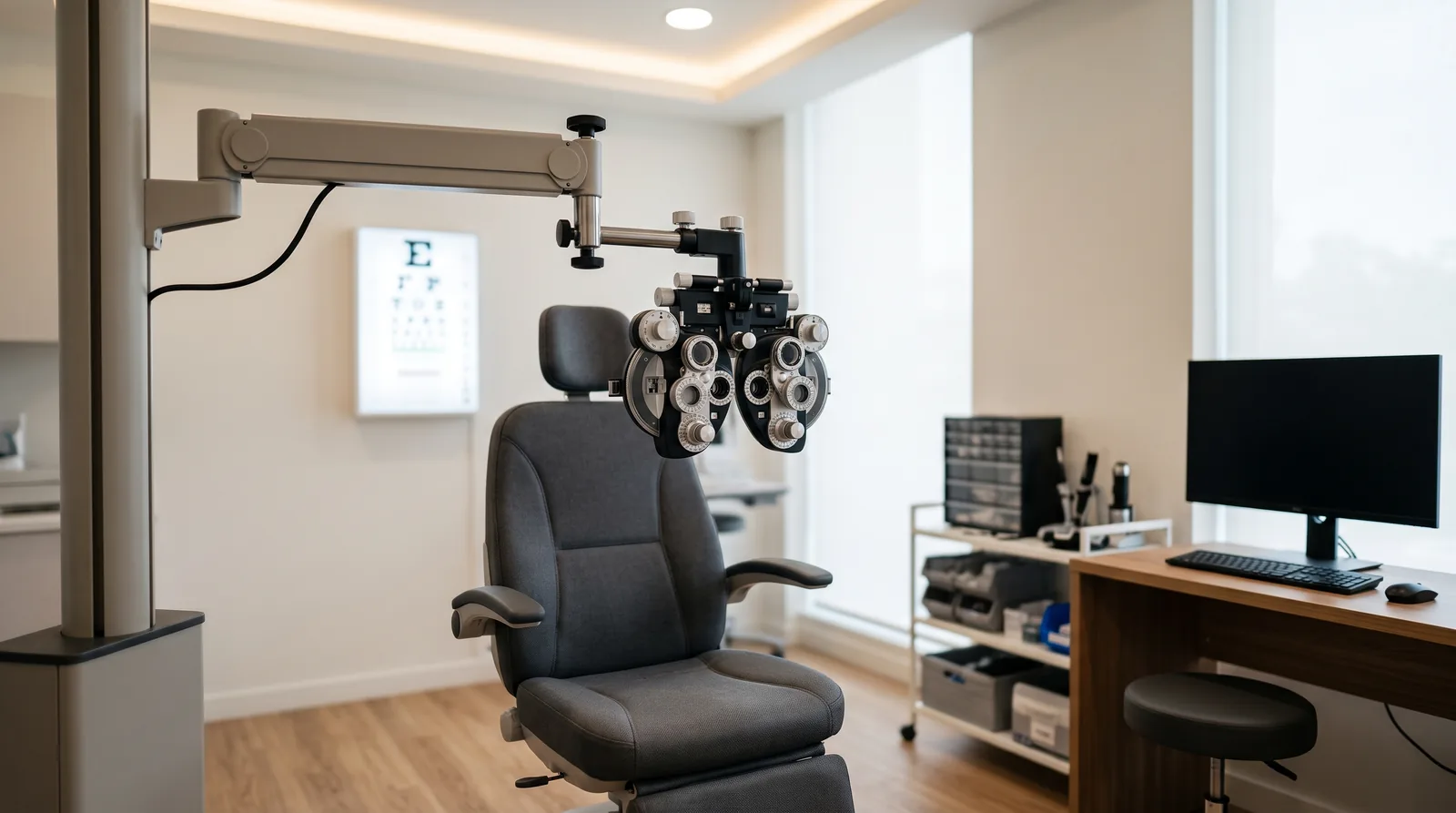

Myopia (short-sightedness) is a refractive error in which distant objects look unclear while near objects stay clearer, because light focuses in front of the retina rather than on it. It is usually caused by a longer eyeball or an overly curved cornea, and can be corrected with glasses, lenses or laser eye surgery.
Written by Op. Dr. Anıl Kaya
What Is Myopia?
Myopia, or short-sightedness, is a refractive error in which distant objects look blurred while near objects stay clear. Light focuses in front of the retina rather than on it, usually because the eyeball is longer than average or the cornea bends light too strongly. It can be corrected with glasses, contact lenses or laser eye surgery, and most often appears in childhood or adolescence.
Quick Facts
Myopia is a common refractive error that can progress during childhood and adolescence. Treatment includes glasses, contact lenses and, once stable, laser eye surgery. Severity ranges from mild to high; the specialist involved is an ophthalmologist. It usually affects both eyes, though the degree can differ, which is assessed during examination. If myopia starts early and progresses quickly, closer monitoring may be recommended.
How Does Myopia Develop?
In myopia, the eye's optical system focuses light from distant objects in front of the retina instead of on it, usually because the eyeball is longer than average or the cornea bends light too strongly. Myopia is classified as mild, moderate or high, with distance vision becoming less clear as severity increases. This mismatch between optical power and eye length means light focuses early, losing sharpness before reaching the retina. The diagram below shows this in a simplified cross-section.
Where do light rays focus in myopia?
What Are the Symptoms of Myopia?
The most common symptom is difficulty reading distant signs, road signs or the whiteboard clearly. Squinting, headaches, eye strain and, in children, reduced interest in schoolwork can also occur. Because blurry distance vision can stem from other refractive errors too, it is covered separately. These symptoms are not specific to myopia alone; a definite diagnosis needs a refractive error measurement during examination.
Blurred distance vision
Difficulty making out signs, road signs or the whiteboard is the most commonly reported symptom.
Squinting
The eyes may narrow involuntarily when trying to bring distant objects into focus.
Headaches and eye strain
These can appear particularly after prolonged periods of looking into the distance.
Reduced interest in schoolwork in children
Not being able to see the whiteboard clearly can look like poor concentration; noticing it early matters.
What Causes Myopia?
Genetic predisposition plays an important part: children with one or both short-sighted parents are more likely to develop myopia than those with no family history of it. Environmental factors are also thought to influence its onset or progression, including long periods of near work such as reading, screen use and studying, and little time spent outdoors; some studies report that children who spend time outdoors daily develop myopia later. Myopia usually begins at school age and can progress gradually while the eyeball is still growing, through adolescence; the prescription is expected to stabilise once growth is complete. The longer the eyeball (its axial length), the more pronounced myopia tends to be, which is why patients with high myopia need regular retinal monitoring. As screen use increases, the link between near work and myopia remains under study; a single proven cause has not been established, but it is regarded as a risk factor.
How much does each factor contribute to myopia?
When Should You See a Doctor?
An eye examination is recommended whenever distance vision noticeably worsens, especially once it affects daily life. A sudden drop in school performance or persistent squinting in children is also a sign an early check-up is worthwhile. If a new glasses prescription increases noticeably each year, the cause and rate of progression should be assessed. Sudden blurred vision, or a marked difference between the eyes, warrants prompt assessment, as it may point to another cause.
How Is Myopia Diagnosed?
Myopia is diagnosed with visual acuity tests and a refractive error measurement, alongside an assessment of corneal thickness and eye structure. If laser treatment is being considered, these measurements are repeated in more detail during a laser suitability assessment. They are quick and cause no discomfort, with results usually reviewed the same day. An autorefractor can also give an objective initial reading independent of subjective responses.
What is the sequence for diagnosing myopia?
Does Myopia Need Treatment?
Corrected with glasses or contact lenses, myopia is not a life-threatening condition; left uncorrected, though, it can affect daily functioning and make learning harder for children. High myopia can raise eye health risks later in life, so regular monitoring matters. For patients with a stable prescription who would rather not wear glasses or lenses, laser eye surgery can be a long-term alternative. Absent other eye disease, regular check-ups and correction are usually enough.
What Are the Treatment Options for Myopia?
The first step in treating myopia is glasses or contact lenses. Once the prescription is stable and the eye's structure is suitable, laser options such as TransPRK (no-touch PRK), femtosecond LASIK or SMILE (KLEx) can be considered. Which method suits a patient depends on age, prescription stability and personal preference, decided through examination as part of a laser suitability assessment.
Glasses
The first-line, non-surgical option that can be used at any age.
Contact lenses
May suit patients who want a wider field of view than glasses provide.
TransPRK / Femto LASIK / SMILE
Long-term laser options considered once the prescription is stable and the eye's structure is found to be suitable.

Frequently Asked Questions
Can laser surgery be done if myopia is still progressing?
Laser eye surgery is generally not recommended before the prescription has stabilised; the ophthalmologist needs to confirm it has stayed the same for a period of time first.
Is myopia treated with laser surgery in children?
No, laser eye surgery is only considered in adults once growth and prescription changes have finished; glasses or contact lenses are used in children.
Can laser surgery always be performed for high myopia?
No, corneal thickness may not be sufficient in very high myopia; in that case, other treatment options are considered.
Does myopia correct itself?
Myopia does not correct itself; it can progress during the growth years, and the prescription usually becomes stable after adolescence.
Is it possible to slow the progression of myopia?
Measures such as spending more time outdoors in childhood are thought to help slow progression; consulting the ophthalmologist for an individual approach is recommended.
Related Content
Astigmatism and hyperopia are other common refractive errors that can occur alongside myopia. More on laser options is covered in the related treatment articles. Which refractive error is dominant in your case becomes clear through examination. Presbyopia, by contrast, is a separate, age-related condition with a different mechanism.
Which Myopia Treatment Suits Which Patient?
Which laser method suits a given case of myopia depends on factors such as corneal thickness, degree of myopia and dry eye. A more detailed decision guide on which method suits which patient is provided separately. TransPRK may be favoured for borderline corneal thickness, while femtosecond LASIK might suit a patient wanting faster visual recovery; this is personalised during examination.
References
- Nearsightedness: What Is Myopia? — American Academy of Ophthalmology (AAO), 2026
Appointments
Questions about myopia can be discussed with Op. Dr. Anıl Kaya during an examination; use the contact page to request an appointment. Your prescription, corneal structure and suitability for laser eye surgery are assessed together, alongside your symptoms and eye health history.
Find the Right Path for You
There are many different conditions and options in this area — browse by topic below, or answer a few questions to see the step closest to your situation.
Explore by Topic
The Basics
4 pagesDiagnosis & Methods
1 pageComparisons
3 pagesDecision Support
1 pageFind What Suits You
Laser Eye Surgery RoadmapA few questions, the right next step for you

Ophthalmologist · Kartal, Istanbul
Why Op. Dr. Anıl Kaya?
Related Pages
Would you like to contact the doctor with a Laser assessment tailored to you?
There are two ways. If you would like the doctor to know your situation before replying, complete the Laser Roadmap first; if your question is short, write directly. Both reach the same team.
Your age and a short sentence are enough; no medical terms needed. What you write is only sent when you send it; this page stores no information.