
What Is SMILE (KLEx)?
SMILE removes a lens-shaped lenticule through a small incision, with no flap. It treats myopia and astigmatism, not hyperopia. Ask our Istanbul clinic on WhatsApp.
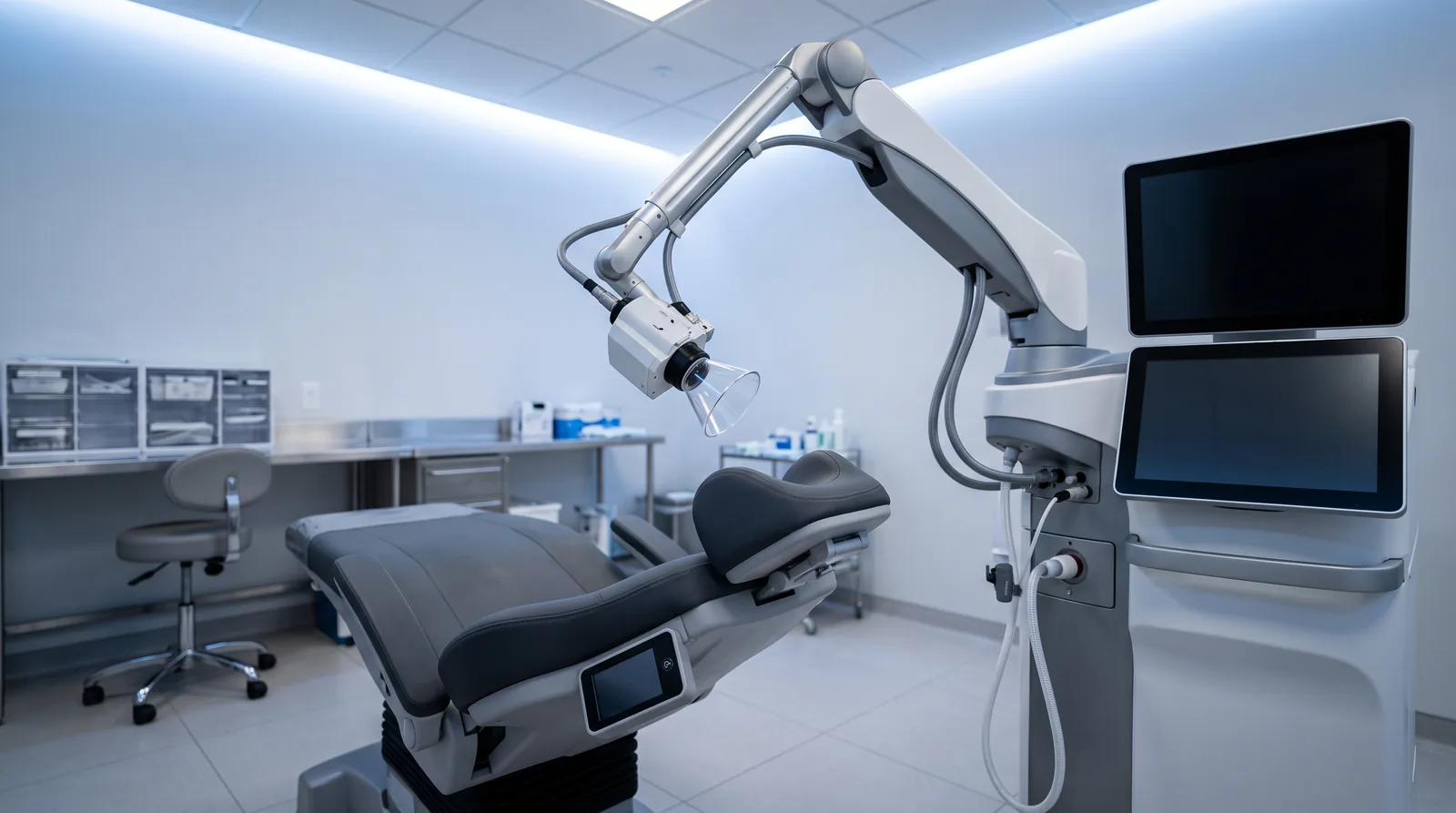

SMILE (KLEx) is a flapless laser eye surgery technique in which a femtosecond laser shapes a small lens-like piece of corneal tissue, the lenticule, and removes it through a tiny incision a few millimetres wide. Unlike femtosecond LASIK, no wide surface layer is lifted. It is used clinically for myopia and astigmatism, not hyperopia.
Written by Op. Dr. Anıl Kaya
What Is SMILE (KLEx)?
SMILE (KLEx) is a flapless laser eye surgery technique: a femtosecond laser shapes a small, lens-like piece of corneal tissue — a lenticule — within the inner cornea, then removes it through an incision only a few millimetres wide. KLEx, short for keratorefractive lenticule extraction, describes the same technique. SMILE is one of the newer laser eye surgery methods and, unlike femtosecond LASIK, does not involve lifting a wide surface layer (a flap); the whole procedure takes place within the cornea using a single laser, associated with less disruption to the corneal nerve network.
How is the lenticule created and removed in SMILE?
Which Main Treatment Does SMILE Belong To?
SMILE is one of the modern laser eye surgery techniques, used clinically for myopia and astigmatism, not hyperopia. PRK, femtosecond LASIK and SMILE aim for the same outcome by different routes; SMILE is set apart by creating no flap and using a far smaller incision. Which technique suits you is decided at the assessment, based on corneal thickness, corneal topography and the type of refractive error.
Who Is SMILE Suitable For?
SMILE is considered for patients with myopia and/or astigmatism who prefer a flapless, smaller-incision technique, and whose corneal structure is suitable. It is not the clinical choice for hyperopia, for which femtosecond LASIK or PRK is used instead. The profiles below are commonly seen among SMILE candidates, though final suitability is only confirmed at assessment. Patients with regular corneal topography and stable eye health are a reasonable starting point. In pregnancy or breastfeeding, the procedure may be postponed, as hormonal changes can temporarily affect visual clarity.
Patients with myopia and/or astigmatism
SMILE is used clinically to correct these two refractive errors.
Those who prefer a flapless, smaller-incision technique
Because the incision is limited to 2-4 mm, a wide area of the cornea is never opened.
Those with a lifestyle carrying a higher risk of contact
As no flap is created, there is no risk of flap displacement.
Patients whose corneal structure is found suitable
Suitability becomes clear through topography and pachymetry measurements at the assessment.

How Is SMILE Performed?
After anaesthetic drops are applied, the patient lies under the laser device with the eye positioned on a fixed target. The femtosecond laser shapes a lens-like piece of tissue — the lenticule — within the cornea, at a depth and shape calculated beforehand; this takes around twenty to thirty seconds. A small incision, around 2-4 mm, is then made, and the surgeon carefully separates and removes the lenticule through it with a fine instrument. Because no flap is created, the corneal nerve network is largely preserved, meaning more limited dry eye in some patients afterwards. The procedure takes only a few minutes per eye, and the patient goes home the same day.
- 1Anaesthetic drops and positioning. The surface of the eye is numbed and the patient is positioned under the laser device.
- 2Creating the lenticule. The femtosecond laser shapes a lens-like piece of tissue within the cornea; this step takes around 20-30 seconds.
- 3Making a small incision. A small incision of around 2-4 mm is made in the cornea.
- 4Removing the lenticule. The lenticule is then carefully removed through this incision using a fine instrument.
What Are the Advantages and Limitations of SMILE?
The advantage of SMILE lies in its very small incision and the absence of a flap; in some patients, this benefits dry eye. Its limitation is that it cannot treat hyperopia and may not suit every corneal structure. The diagram below compares the incision size of SMILE with the flap opening of femtosecond LASIK; PRK involves no separate incision, as it works by direct surface ablation. A smaller incision also leaves more corneal surface intact.
Incision/opening size compared between techniques
What Is the Recovery Process Like After SMILE?
In most patients, recovery progresses relatively quickly, with noticeably clearer vision often reported within the first day. Because the incision is small, some patients find the first few days more comfortable. As no flap is created, the corneal nerve network is largely preserved, meaning more limited dry eye in some patients than after femtosecond LASIK. Full visual stability may take days to weeks, varying from person to person. Follow-up appointments are usually set at the first day, one week and one month.
What Are the Risks of SMILE?
Risks include infection, temporary fluctuations in vision, a visual outcome different from what was predicted, and, rarely, technical difficulty removing the lenticule. These occur at a low frequency, with more detail given at the assessment. Rarely, an additional manoeuvre may be needed during lenticule removal, managed by the surgeon at the time. Using the prescribed drops correctly and keeping follow-up appointments help catch complications early. Light sensitivity and a temporary sensation of halos and glare at night are reported by some patients in the first weeks and tend to ease over time. Temporary irritation at the incision site occasionally occurs and usually settles by itself.
How often do risks and side effects occur with SMILE?
What Are the Alternatives to SMILE?
Alternatives to SMILE include TransPRK (no-touch PRK) and femtosecond LASIK; for hyperopia, one of these two is used instead. In borderline corneal thickness, flapless PRK may stand out, while femtosecond LASIK may suit those who prioritise faster visual recovery. The type and degree of refractive error can also guide the choice, with separate content on myopia and astigmatism. The most suitable alternative becomes clear through topography and pachymetry measurements at assessment.
| PRK | Femto LASIK | SMILE | |
|---|---|---|---|
| No flap is created | ✓ | — | ✓ |
| Used for hyperopia | ✓ | ✓ | — |
How Does SMILE Compare With Other Techniques?
How SMILE compares with PRK and femtosecond LASIK — in incision size, dry eye risk and speed of recovery — is covered in separate comparison content. A general overview of which technique may suit you is available in the laser suitability assessment and technique decision guide. For patients who value a very small incision, or who have a history of dry eye, the difference from femtosecond LASIK is worth reviewing before deciding.
Frequently Asked Questions
How long does recovery take after SMILE?
In most patients, recovery tends to be relatively quick, although the exact timeframe varies from person to person.
Is SMILE used for hyperopia?
No, SMILE is used clinically only for myopia and astigmatism.
Does SMILE create a flap?
No, SMILE is a flapless technique; the lenticule is removed through a small incision.
What is the main difference between SMILE and femtosecond LASIK?
In SMILE, no flap is created and the lenticule is removed through a small incision only a few millimetres wide, whereas femtosecond LASIK involves lifting a wider flap first. This affects incision size and, in some patients, dry eye risk.
Is SMILE suitable for correcting hyperopia?
No, SMILE is used clinically only for myopia and astigmatism; for patients with hyperopia, femtosecond LASIK or PRK is considered instead.
References
- What Is Small Incision Lenticule Extraction? — American Academy of Ophthalmology (AAO), 2026
- SMILE Lenticule Implantation — American Academy of Ophthalmology — EyeWiki, 2026
Appointment
To find out whether SMILE is right for you, request an appointment at Op. Dr. Anıl Kaya's practice in Istanbul through the contact page. At the assessment, corneal thickness, corneal topography and the type of your refractive error are considered together to clarify which technique suits you. The initial visit also covers your dry eye history and daily habits.
Find the Right Path for You
There are many different conditions and options in this area — browse by topic below, or answer a few questions to see the step closest to your situation.
Explore by Topic
The Basics
4 pagesDiagnosis & Methods
1 pageComparisons
3 pagesDecision Support
1 pageFind What Suits You
Laser Eye Surgery RoadmapA few questions, the right next step for you

Ophthalmologist · Kartal, Istanbul
Why Op. Dr. Anıl Kaya?
Related Pages
Would you like to contact the doctor with a Laser assessment tailored to you?
There are two ways. If you would like the doctor to know your situation before replying, complete the Laser Roadmap first; if your question is short, write directly. Both reach the same team.
Your age and a short sentence are enough; no medical terms needed. What you write is only sent when you send it; this page stores no information.