
What Is a Monofocal Intraocular Lens?
A monofocal lens gives high-contrast vision at one distance, typically far, with lower halo risk; reading glasses are usually needed. Book an eye examination in Istanbul.


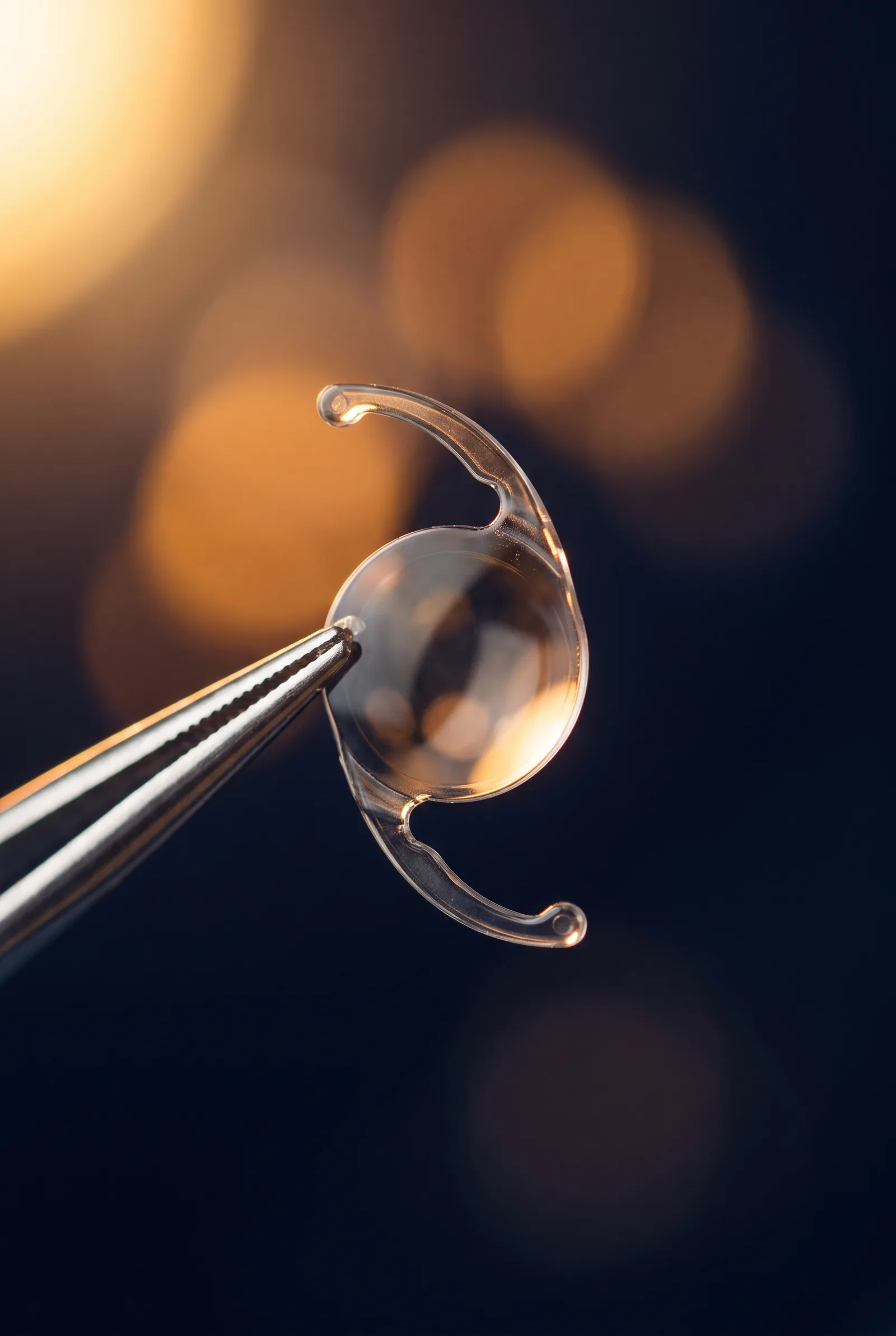
A monofocal intraocular lens is the artificial lens most commonly used in cataract surgery, giving clear vision at one distance — usually far. It offers high contrast with a lower risk of haloes than multifocal lenses, though reading glasses are typically still needed up close. It is a long-established, well-proven technology.
Written by Op. Dr. Anıl Kaya
What Is a Monofocal Lens?
A monofocal intraocular lens (IOL) is the lens most widely used in cataract surgery, giving clear vision at one distance — usually far. It replaces the eye's clouded lens so light focuses onto the retina.
At a Glance
A monofocal IOL is the artificial lens most commonly chosen for cataract surgery, calculated for a single focusing distance. The usual aim is sharp, high-contrast vision at far distance, while reading glasses are still needed up close. It is a long-established technology with decades of predictable use.
How Does a Monofocal Lens Work?
A monofocal lens has a single, fixed focusing power, usually set for clear vision at far distance, calculated from pre-operative biometric measurements — corneal curvature, axial length and anterior chamber depth — tailored to that eye.
Unlike multifocal lenses, it has no separate zone for near or intermediate distance: light comes together at one point, usually set for distance. This is why reading glasses are generally still needed close up.
In some patients, the surgeon may set one eye for distance and the other closer — an approach called monovision — to reduce the need for reading glasses. This suits only some patients and needs assessing beforehand.
What Is a Monofocal Lens Used For?
Monofocal lenses are chosen to achieve clear, high-contrast vision at far distance after cataract surgery.
They can suit patients who prioritise sharp vision over reducing overall reliance on glasses, and offer a familiar option for people who have worn glasses for life and are already comfortable with them.
Which Treatment Uses a Monofocal Lens?
A monofocal IOL is implanted in place of the eye's natural lens during cataract surgery, explained on a separate page.
The same phacoemulsification technique is used regardless of lens type; only the inserted lens's design changes. So lens choice does not significantly affect surgery's length or technique.
Which Examination Assesses a Monofocal Lens?
The power of a monofocal lens is calculated during the pre-operative eye examination and biometric measurements, described on a separate page.
Measurements such as corneal curvature and axial length feed directly into the lens-power calculation for that eye. Their accuracy directly affects how closely the intended far-vision result is achieved after surgery.
What Advantages Does a Monofocal Lens Offer Patients?
Monofocal lenses are a well-established technology used for many years.
They generally provide high-contrast, sharp distance vision, with fewer optical side effects such as haloes and glare than multifocal lenses.
This predictability is a particular advantage for patients whose eye anatomy limits multifocal lens use. As the most widely used IOL type worldwide, it is backed by extensive clinical experience.
These are general tendencies; individual suitability is determined at examination.
General Vision Profile of a Monofocal Lens
What Are the Limitations of a Monofocal Lens?
A monofocal lens does not correct presbyopia (age-related difficulty focusing up close), so reading glasses are generally still needed after surgery. Some also notice less sharpness at intermediate distance, such as a computer screen, and choose a separate pair of glasses for it.
If being glasses-free is the priority, a monofocal lens may not always meet it, and multifocal options can be discussed with the surgeon instead. Some fluctuation in vision during the first few days is common and settles over time; the final, stable result can take a few weeks.
How Often Limitations Occur with a Monofocal Lens
What Alternative Lens Technologies Are Available Instead of a Monofocal Lens?
For patients wanting less dependence on glasses, extended-range or multifocal options such as monofocal plus, EDOF and trifocal lenses can be considered; each is covered on its own page.
Monofocal Plus
Aims to add intermediate-distance comfort to sharp distance vision.
What is a monofocal plus lens?EDOF
Provides a continuous, extended band of focus between distance and intermediate range.
What is an EDOF lens?Trifocal
Aims for clear vision at near, intermediate and far distance together.
What is a trifocal lens?Why Does the Surgeon Recommend a Monofocal Lens?
Op. Dr. Anıl Kaya considers a monofocal lens for patients whose eye anatomy, other eye conditions, or priority for sharp distance vision make it suitable; his approach to lens selection is on his profile page.
It is considered a first option when there is advanced disease at the back of the eye, irregular astigmatism, or another finding limiting multifocal use, since it offers a more predictable outcome.
How Is a Monofocal Lens Chosen?
Whether a monofocal lens is suitable is not decided by a single criterion, but through a multi-step assessment.
- 1Examination and Biometric Measurement. Eye anatomy is assessed through measurements such as corneal curvature, axial length and anterior chamber depth.
- 2Lifestyle and Vision Needs Assessment. How often the patient reads day-to-day, and how willing they are to use reading glasses, is discussed with the surgeon.
- 3Comparison with Other Lens Options. Alternative lens technologies such as monofocal plus, EDOF or trifocal are reviewed.
- 4Joint Decision with the Surgeon. The final lens choice is made by weighing the examination findings together with the patient's expectations.
Frequently Asked Questions
The most frequently asked questions about monofocal intraocular lenses are answered below.
Will I need reading glasses with a monofocal lens?
Usually yes — reading glasses are often needed to see clearly at near distance.
Is a monofocal lens set the same way in both eyes?
In most cases, both eyes are set for far distance; in certain situations a different plan may be used, depending on the surgeon's assessment.
Does a monofocal lens stay in the eye long-term?
Yes — intraocular lenses are generally implanted so that they remain in the eye on a long-term basis.
Does a monofocal lens affect night driving?
Monofocal lenses generally provide high contrast, and haloes and glare at night tend to occur less often than with multifocal lenses, which can be an advantage for night driving.
Do I need glasses to use a computer with a monofocal lens?
Some patients notice a slight loss of sharpness at intermediate distance, such as a computer screen; a separate pair of intermediate-distance glasses may be preferred in that case, and this is assessed at examination.
What is monovision, and can it be used with a monofocal lens?
In some patients, the surgeon may set one eye for distance and the other for a closer range to reduce the need for reading glasses; this strategy is not suitable for everyone and needs to be assessed beforehand.
References
- Monofocal Intraocular Lenses — StatPearls - National Library of Medicine (NCBI), 2023
- Intraocular Lenses (IOL) for Cataract Surgery — American Academy of Ophthalmology (AAO), 2026
What Does a Monofocal Lens Mean for Daily Life?
Patients fitted with a monofocal lens typically enjoy clear, glasses-free vision at far distance — reading road signs while driving, watching television, or seeing clearly on a walk. This clarity is most noticeable in daylight and wherever contrast matters.
By contrast, most still need reading glasses for close-up tasks such as books, newspapers or a phone screen. Some also notice slight blurring at intermediate distance, such as a computer screen, and prefer a separate pair of glasses for it. Which distances matter most day to day is worth discussing with the surgeon beforehand.
What Is Recovery and Adaptation Like with a Monofocal Lens?
Because a monofocal lens has only one focal point, the brain needs no extra learning process — the adaptation period sometimes seen with multifocal lenses does not apply here.
In most patients, clarity improves noticeably within a few days, while full stabilisation can take a few weeks. Attending the surgeon's recommended follow-up visits confirms healing is progressing as expected.
What Misconceptions Surround Monofocal Lenses?
A monofocal lens is sometimes seen as an 'older' or 'lower-quality' option. This reflects its design for a single distance, not a lack of sophistication — at far distance its visual quality can match multifocal lenses, and on some measures even offer higher contrast.
Another misconception: it is always a second-choice option. In fact, for patients whose eye anatomy does not suit a multifocal lens, or who simply prioritise sharp distance vision, it can be the most appropriate, considered choice.
What Happens If a Slight Prescription Remains After Surgery?
Even with careful lens power calculation, a small residual prescription can remain in some patients — this is not unusual and is usually corrected comfortably with a light pair of glasses.
If the eye is suitable, this can also be addressed with a separate laser vision correction procedure, considered with the surgeon once vision has stabilised.
Find the Right Path for You
There are many different conditions and options in this area — browse by topic below, or answer a few questions to see the step closest to your situation.
Explore by Topic
The Basics
2 pagesDiagnosis & Methods
4 pagesTreatment
1 pageComparisons
2 pagesDecision Support
1 pageFind What Suits You
Cataract RoadmapA few questions, the right next step for you


Ophthalmologist · Kartal, Istanbul
Why Op. Dr. Anıl Kaya?
Related Pages
How Is Cataract Surgery Performed?
What Is a Full Eye Examination, and What Does It Check?
Which Intraocular Lens Is Right for You?
What Is a Monofocal Plus IOL?
What Is an EDOF Intraocular Lens?
What Is a Trifocal IOL?
Intraocular Lens Types Compared: Monofocal, Monofocal Plus, EDOF and Trifocal
Monofocal or Trifocal Intraocular Lens?
Contact and Appointments
Would you like to contact the doctor with a Cataract assessment tailored to you?
There are two ways. If you would like the doctor to know your situation before replying, complete the Cataract Roadmap first; if your question is short, write directly. Both reach the same team.
Your age and a short sentence are enough; no medical terms needed. What you write is only sent when you send it; this page stores no information.