
What Is High Myopia?
High myopia usually means around -6.00 dioptres or more, from a longer eyeball, and may need retinal checks. See the options and book an eye examination in Istanbul.
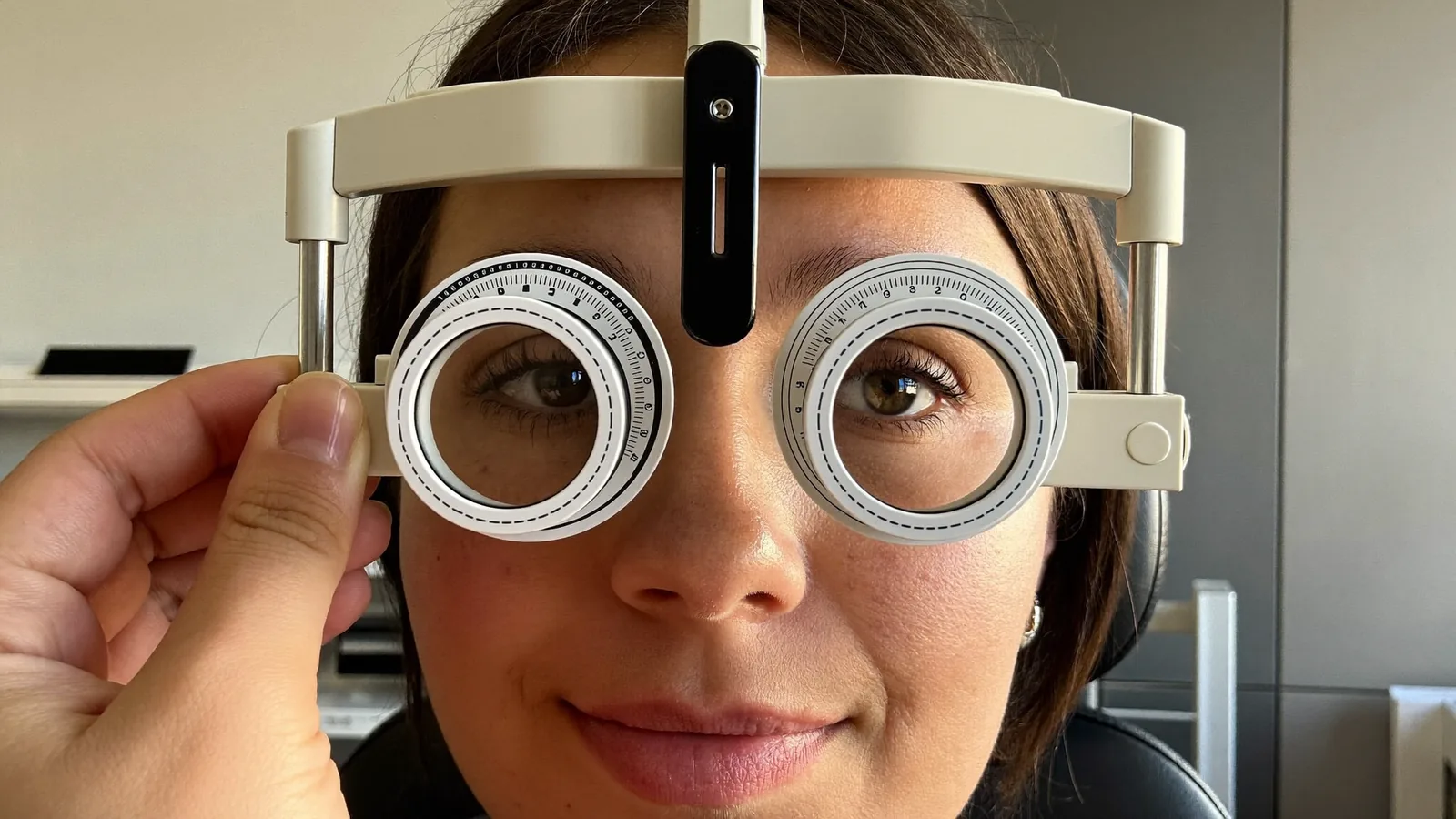

High myopia means a glasses prescription of around -6.00 dioptres or more, with clearly blurred distance vision. It occurs because the eyeball is longer than average, and this elongated structure may call for regular retinal monitoring; treatment options include glasses, contact lenses, or, in suitable patients, a permanent option such as ICL.
Written by Op. Dr. Anıl Kaya
What Is High Myopia?
High myopia is a refractive error in which the glasses prescription reaches around -6.00 dioptres or more, with clearly blurred distance vision. Because the eyeball tends to be longer than average, it can also call for regular monitoring of the retina and of eye health generally, beyond simply needing glasses or contact lenses.
Myopia is a common refractive error, and high myopia is its more advanced end — better approached as a picture of the eye's structure as a whole than simply "what prescription."
Op. Dr. Anıl Kaya assesses patients with high myopia at his Istanbul clinic through a detailed eye examination and recommends suitable treatment accordingly. This page covers how high myopia develops, its symptoms, diagnosis, and treatment options.
Quick Facts
- Who it affects: Myopia beginning in childhood or adolescence that reaches -6.00 dioptres or more in adulthood.
- Is it treatable: Yes — besides glasses or contact lenses, permanent options such as ICL (phakic lens) and, in suitable patients, laser may be considered.
- Severity: A high prescription is not itself an emergency, though the elongated eye may need additional retinal monitoring in some patients.
- Permanence: Myopia is corrected rather than resolved on its own; permanent treatment is considered only once the prescription has stabilised.
- Relevant specialty: Ophthalmology.
How Does High Myopia Develop?
In myopia, images focus in front of the retina, which is why distant objects appear blurred — usually because the eyeball is longer than average, or the cornea or natural lens has too much focusing power.
In high myopia this reaches a more pronounced degree; what sets it apart is often not the size of the prescription but the increase in the eye's axial length, its front-to-back dimension. A longer eye means its internal tissues must adapt to that elongation, which is why high myopia is not just a matter of "thick glasses" but a picture worth monitoring for overall eye health.
As the prescription increases, lenses also thicken, which some find inconvenient. High myopia should be followed with regular eye examinations.
What Are the Symptoms of High Myopia?
The most obvious symptom is being unable to see distant objects clearly without glasses; as the prescription increases, this blurring can extend to closer distances too. Patients most often raise the concern "my prescription keeps increasing — is that normal?", which we address separately, distinguishing an expected pattern from a progression that needs closer follow-up.
Patients may also report reduced night vision, eye strain after long reading or screen use, and sometimes halos around lights. For some, the practical difficulties of a strong prescription — in sport, driving, or at work — matter as much as the symptoms themselves.
What Causes High Myopia?
Inherited predisposition plays an important part in high myopia; children with a family history of it are at increased risk. Prolonged close-up focusing in childhood and adolescence — extended screen or reading time — and limited time outdoors are also linked with myopia progression.
Myopia usually progresses during the growing years, while the eyeball continues to grow; in adulthood the rate slows in most patients, though in some it can continue.
As the degree of myopia rises, the approach considered changes too. In mild myopia, glasses or contact lenses are usually enough; once the prescription is stable in moderate myopia, laser methods may also be considered if the cornea is suitable. Once it reaches the high-myopia range, ICL generally becomes the preferred permanent option, since corneal thickness at this degree is often insufficient for laser. The chart below summarises this pattern qualitatively; the final decision always depends on examination findings.
General Pattern by Degree of Myopia
When Should You See a Doctor?
If your glasses prescription keeps increasing noticeably across successive measurements, book an eye examination without delay; how it is progressing also affects the timing of any treatment decision.
A sudden worsening of night vision, more floaters, flashes of light, or a shadow or curtain across part of your vision should be assessed without waiting for these to settle. In high myopia, the eye's greater length means such symptoms may need a more urgent retinal assessment — covered on our retinal diseases page.
How Is High Myopia Diagnosed?
High myopia is diagnosed at a standard eye examination, through measurement of the glasses prescription and a fundus (retinal) examination; corneal topography and biometry are added when needed. The aim is to establish the prescription and check for any effect of the elongated eye on the retina — more on our eye examination page. The chart below summarises the usual examination order.
Examination Order for High Myopia Assessment
Does High Myopia Need Treatment?
High myopia can be managed day to day with glasses or contact lenses; for patients wanting a permanent solution who meet the suitability criteria, surgical refractive treatments are also an option.
Left untreated, it is not life-threatening; many patients manage well with glasses or contact lenses. Without regular eye examinations, changes linked to the eye's elongated structure can go unnoticed — so "treatment is not needed" is not the same as "follow-up is not needed."
What Are the Treatment Options for High Myopia?
The permanent treatment considered most often for high myopia is ICL (phakic lens): a lens placed inside the eye corrects the refractive error without reshaping the cornea. In patients whose cornea is suitable and whose myopia falls within laser limits, laser methods may also be considered, though at very high degrees corneal thickness is often insufficient for laser.
When significant astigmatism accompanies high myopia, a toric ICL — addressing both at once — may be considered instead of a standard ICL; covered on our ICL page.
How ICL is performed and who it suits is covered on its own page.
Frequently Asked Questions
From what prescription is myopia considered "high"? Around -6.00 dioptres or more, though the exact assessment is confirmed only at examination.
Does high myopia keep progressing? Usually during the growing years, slowing in most adults; in some it continues, so regular follow-up matters.
Should high myopia be corrected with glasses or with surgery? Glasses or contact lenses can be enough day to day; patients wanting a permanent solution who meet the suitability criteria may consider options such as ICL.
Is there a retinal risk with high myopia? The elongated eye can thin the retina in some patients, so regular fundus examinations are recommended.
Does high myopia also raise the risk of glaucoma? A longer-than-average eyeball can affect the optic nerve head, so high myopia is considered a recognised glaucoma risk factor.
Can everyone with high myopia have ICL? No — suitability depends on corneal structure, anterior chamber depth, endothelial cell count and prescription stability, confirmed only after a detailed examination.
From what prescription is myopia considered "high"?
Around -6.00 dioptres or more, though the exact assessment is confirmed only at examination.
Does high myopia keep progressing?
Usually during the growing years, slowing in most adults; in some it continues, so regular follow-up matters.
Should high myopia be corrected with glasses or with surgery?
Glasses or contact lenses can be enough day to day; patients wanting a permanent solution who meet the suitability criteria may consider options such as ICL.
Is there a retinal risk with high myopia?
The elongated eye can thin the retina in some patients, so regular fundus examinations are recommended.
Does high myopia also raise the risk of glaucoma?
A longer-than-average eyeball can affect the optic nerve head, so high myopia is considered a recognised glaucoma risk factor.
Can everyone with high myopia have ICL?
No — suitability depends on corneal structure, anterior chamber depth, endothelial cell count and prescription stability, confirmed only after a detailed examination.
Related Content
Related pages you may find useful include ICL (phakic lens) surgery, our ICL vs laser comparison, the "prescription keeps increasing" concern, general eye examinations, and laser eye surgery. For other aspects of eye health worth monitoring in high myopia, see our retinal diseases and glaucoma pages — both recognised risk factors linked with high myopia.
Which Treatment Suits Which Patient with High Myopia?
Which treatment suits a patient depends on corneal thickness, anterior chamber depth, the degree of myopia, and overall eye health. As a general pattern, laser is considered first where corneal thickness is adequate and myopia falls within laser limits, while ICL tends to be preferred where corneal thickness is limited or myopia is very high. In younger patients whose prescription is still changing, both are usually postponed until it stabilises. The final decision rests on examination measurements together with a discussion with your doctor; our comparison page can also help while you weigh it up.
How Do the Treatments for High Myopia Compare?
Our "ICL vs Laser" comparison page covers the difference between the two, and which tends to suit which patient, in more detail. The key distinction is where the treatment acts: laser permanently reshapes the cornea, while ICL adds a lens inside the eye without touching it.
What Is the Doctor's Approach to High Myopia?
Op. Dr. Anıl Kaya bases the treatment decision for high myopia not on prescription size alone, but on corneal structure, anterior chamber depth, fundus findings and the patient's day-to-day needs together. If the prescription is not yet stable, or another finding is present, this is explained clearly and surgery postponed if needed. More on the doctor on his own page.
References
- Myopia — American Academy of Ophthalmology — EyeWiki, 2026
- Pathologic Myopia (Myopic Degeneration) — American Academy of Ophthalmology — EyeWiki, 2026
Book an Appointment
To find out whether your prescription falls within the high-myopia range, and which treatments may suit you, book an appointment at Op. Dr. Anıl Kaya's Istanbul clinic. Your examination assesses corneal structure, anterior chamber depth and fundus findings.
Find the Right Path for You
There are many different conditions and options in this area — browse by topic below, or answer a few questions to see the step closest to your situation.
Explore by Topic
The Basics
2 pagesComparisons
1 pageFind What Suits You
ICL / Phakic Lens RoadmapA few questions, the right next step for you


Related Pages
ICL (Phakic Intraocular Lens) Surgery
My Prescription Keeps Changing — Is That Normal?
ICL vs Laser Eye Surgery
What Is a Full Eye Examination, and What Does It Check?
What Is a Laser Suitability Assessment?
Retinal Diseases and Treatment Options
What Are Retinal Tear and Retinal Detachment?
Contact and Appointments
Would you like to contact the doctor with a ICL assessment tailored to you?
There are two ways. If you would like the doctor to know your situation before replying, complete the ICL Roadmap first; if your question is short, write directly. Both reach the same team.
Your age and a short sentence are enough; no medical terms needed. What you write is only sent when you send it; this page stores no information.