
What Is a Trifocal IOL?
A trifocal lens aims for clear near, intermediate and distance vision to cut reliance on glasses; some notice more night halos. Book a consultation in Istanbul.
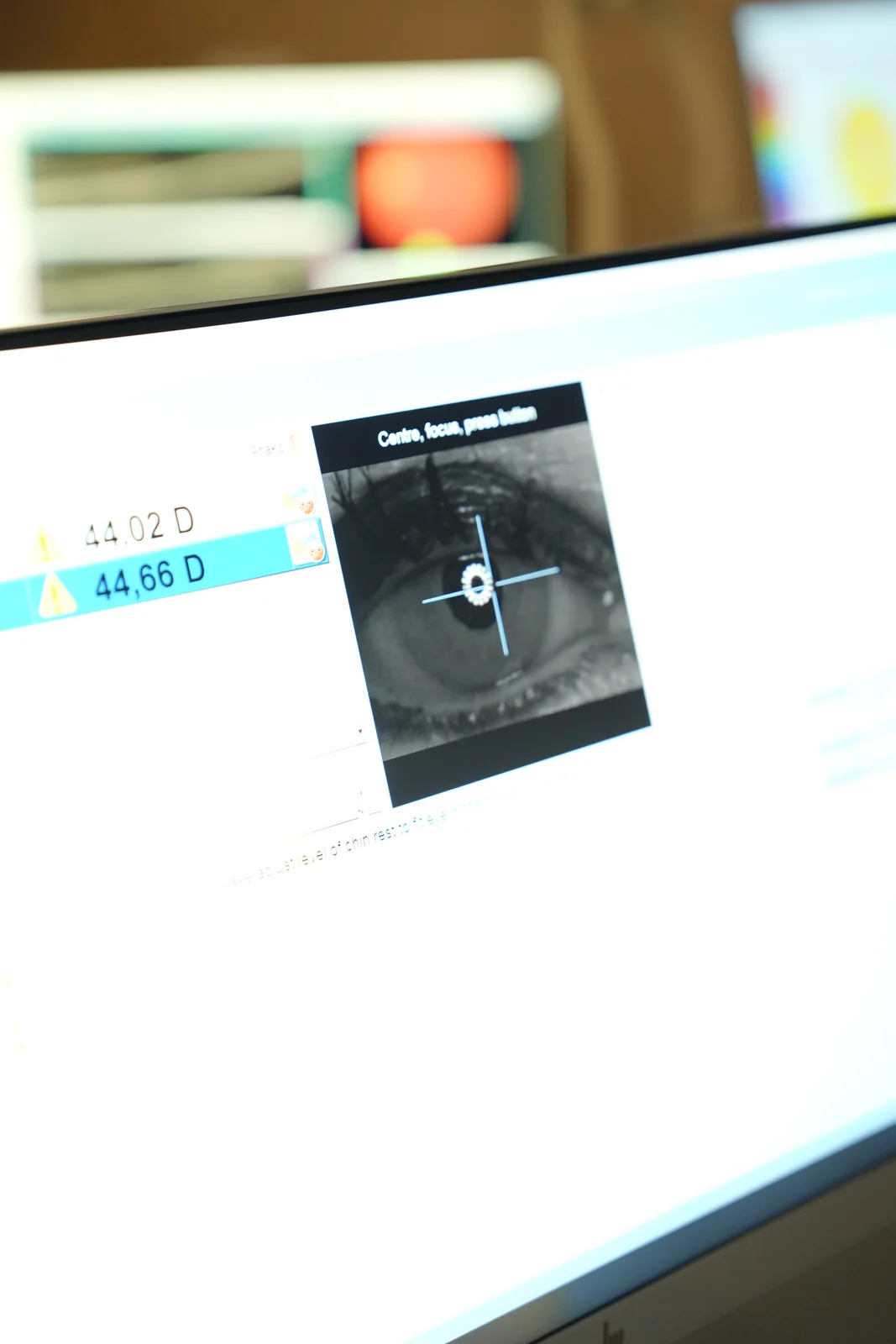

A trifocal IOL is a multifocal lens used in cataract surgery that aims to provide clear near, intermediate and distance vision together. It suits patients whose eye structure is compatible and who want less daily reliance on glasses; some notice more pronounced night halos and glare than with other lens types.
Written by Op. Dr. Anıl Kaya
What Is a Trifocal IOL?
A trifocal IOL is a multifocal lens implanted during cataract surgery that aims to give clear vision at near, intermediate and distance ranges together, reducing reliance on glasses for most everyday activities.
Quick Facts
A trifocal IOL is a diffractive multifocal lens that splits light between near, intermediate and distance focal points, aiming to reduce spectacle dependence after cataract surgery. It covers a wide range of distances without glasses, though night halos and glare can be more noticeable than with other lens types. Suitability is confirmed at examination.
How Does a Trifocal IOL Work?
A trifocal IOL has a specialised optical design that splits incoming light across three focal points — near, intermediate and distance — through concentric diffractive rings on the lens surface.
Over time, the brain learns to select the image needed for the distance in use and suppress the others; this adaptation varies between patients and generally takes from the first few weeks after surgery to a few months, with an initial sense of switching between images that usually eases.
What Is a Trifocal IOL Used For?
Trifocal lenses are chosen by patients who want to meet most of their everyday visual needs — reading, computer use and seeing at a distance — without glasses.
In Which Treatment Is a Trifocal IOL Used?
A trifocal IOL is implanted during cataract surgery, described in detail on a separate page.
The same phacoemulsification technique is used; only the optical design of the lens differs.
Which Examination Assesses Suitability for a Trifocal IOL?
Suitability is assessed using the corneal and intraocular measurements taken at the general pre-operative eye examination; irregular astigmatism or certain retinal conditions can affect whether this lens is appropriate.
Corneal topography and pupil diameter directly affect a trifocal lens's optical performance, so more detailed measurements may be requested alongside standard biometry.
What Advantages Does a Trifocal IOL Offer the Patient?
In suitable patients, trifocal lenses can markedly reduce day-to-day reliance on glasses, aiming to provide usable vision at near, intermediate and distance together.
Among the four lens types, it offers the strongest near-vision performance — a clear advantage for patients doing a lot of close-up work such as reading or handwork.
These are general tendencies; your own suitability is determined at examination.
Which Distances Does a Trifocal IOL Benefit?
What Are the Limitations of a Trifocal IOL?
Trifocal lenses do not satisfy every patient equally; night halos and glare can be more noticeable in some patients, so this is discussed beforehand with those who drive at night for long periods.
Another eye condition — advanced macular degeneration or irregular astigmatism, for example — can make a trifocal lens unsuitable; a monofocal or EDOF lens is then considered instead. Contrast sensitivity can also be slightly reduced, rarely a problem day to day but sometimes noticeable in low light.
Marked dry eye is treated and stabilised first, then suitability is reassessed, since untreated dry eye can reduce the benefit of a multifocal lens.
How Common Are the Limitations of a Trifocal IOL?
What Alternative Technologies Can Be Used Instead of a Trifocal IOL?
For patients wanting to reduce the risk of optical side effects, or whose eye structure does not suit a multifocal lens, monofocal, monofocal plus or EDOF lenses are alternatives.
Monofocal
Prioritises the sharpest possible distance vision with the lowest halo risk.
What is a monofocal IOL?Monofocal Plus
Adds a limited extension into intermediate vision alongside distance clarity.
What is a monofocal plus IOL?EDOF
Offers a continuous band from distance to intermediate rather than three separate focal points.
What is an EDOF IOL?Why Does the Doctor Recommend a Trifocal IOL?
Op. Dr. Anıl Kaya considers a trifocal lens for patients whose eye structure is suitable and who want to reduce reliance on glasses.
It may be recommended for patients who make heavy use of near, intermediate and distance vision, accept the risk of night halos, and show examination findings consistent with a multifocal lens.
How Is a Trifocal IOL Chosen?
Choosing a trifocal lens is not a single step; it becomes clear through examination, a lifestyle assessment and comparison with other options. The steps below summarise this process.
- 1Examination and Measurement. Measurements such as corneal topography, biometry and pupil diameter are used to assess whether the eye's structure suits a multifocal lens.
- 2Lifestyle and Visual Needs Assessment. Daily needs such as reading, computer use and night-driving habits are discussed; the risk of halos and glare is addressed separately for patients who drive at night for long periods.
- 3Comparison with Other Lens Options. Monofocal, monofocal plus and EDOF lens options are considered alongside the trifocal lens, weighing up the balance of advantages and limitations.
- 4Joint Decision with the Doctor. Examination findings and the patient's priorities are considered together to reach the final lens decision.
Frequently Asked Questions
The most frequently asked questions about trifocal IOLs are answered below.
Will I no longer need glasses at all with a trifocal lens?
In most patients, day-to-day reliance on glasses is markedly reduced, but some patients may still need glasses lightly in specific situations, such as reading very small print.
Can a trifocal lens be used in everyone?
No, suitability depends on the structure of the eye and any accompanying eye conditions, and this is determined at examination.
Are there problems with night vision with a trifocal lens?
Some patients notice halos around lights; this usually eases over time, though not to the same extent in everyone.
How long does the adaptation process take with a trifocal lens?
The brain's learning to select between the three focal points generally takes anywhere from a few weeks to a few months, and this varies from person to person.
Does a trifocal lens give the same result in everyone?
No, the outcome varies from person to person depending on eye structure, pupil size and examination findings.
References
- Trifocal Intraocular Lenses — American Academy of Ophthalmology (EyeWiki), 2026
- Comparison of Patient Outcomes following Implantation of Trifocal and Extended Depth of Focus Intraocular Lenses: A Systematic Review and Meta-Analysis — Journal of Ophthalmology (PMC), 2021
What Changes in Daily Life with a Trifocal IOL?
Patients with trifocal lenses can usually meet most daily visual needs — reading, computer use, seeing at a distance — without glasses, switching between these ranges many times a day, from a book to a phone screen to driving.
At night, halos and glare around lights can be more noticeable, worth discussing beforehand with patients who often drive long distances after dark.
How often these transitions occur varies: office workers may switch frequently between a computer, phone and meetings, while retired patients move more between reading, handwork and time outdoors.
Which Patients Is a Trifocal IOL Particularly Considered For?
A trifocal IOL suits patients who want to reduce reliance on glasses as much as possible, whose eye structure fits a multifocal lens, and who accept the risk of night halos and glare.
It can suit those doing a lot of close-up work — reading, handwork, sewing — while wanting to stay glasses-free at distance too, and is often chosen by active retired patients combining travel, reading and handwork with distance activities.
How Does Visual Adaptation (Neuroadaptation) Work with a Trifocal IOL?
With a trifocal lens, the brain learns to select the image needed at that moment from three focal points while suppressing the others; this process, neuroadaptation, generally takes from the first few weeks after surgery to a few months.
Some patients notice slight double imaging when switching between distances during this period; it usually eases with time and varies from person to person — some adjust within days, others over a few months.
What Points Are Commonly Misunderstood About a Trifocal IOL?
A trifocal lens is sometimes taken to mean never needing glasses again; in reality, reliance is markedly reduced in most patients, though a mild need can remain for specific tasks such as reading very small print.
Another misconception is that halo and glare risk is the same for everyone; it varies with pupil size and eye structure — some patients barely notice it, others more so early on.
Find the Right Path for You
There are many different conditions and options in this area — browse by topic below, or answer a few questions to see the step closest to your situation.
Explore by Topic
The Basics
2 pagesDiagnosis & Methods
4 pagesTreatment
1 pageComparisons
2 pagesDecision Support
1 pageFind What Suits You
Cataract RoadmapA few questions, the right next step for you



Ophthalmologist · Kartal, Istanbul
Why Op. Dr. Anıl Kaya?
Related Pages
How Is Cataract Surgery Performed?
What Is a Full Eye Examination, and What Does It Check?
Which Intraocular Lens Is Right for You?
What Is a Monofocal Intraocular Lens?
What Is a Monofocal Plus IOL?
What Is an EDOF Intraocular Lens?
Intraocular Lens Types Compared: Monofocal, Monofocal Plus, EDOF and Trifocal
Monofocal or Trifocal Intraocular Lens?
What Is Presbyopia?
Contact and Appointments
Would you like to contact the doctor with a Cataract assessment tailored to you?
There are two ways. If you would like the doctor to know your situation before replying, complete the Cataract Roadmap first; if your question is short, write directly. Both reach the same team.
Your age and a short sentence are enough; no medical terms needed. What you write is only sent when you send it; this page stores no information.