
PRK (No-Touch) or Femto LASIK: Which Is Right for You?
Femto LASIK lifts a thin flap and vision often clears sooner; PRK needs no flap and may suit thin corneas. Compare them and check your suitability in Istanbul.


PRK and Femto LASIK are both laser techniques for correcting short-sightedness, long-sightedness and astigmatism. PRK treats the corneal surface without creating a flap, while Femto LASIK lifts a thin corneal flap first, which often means vision sharpens sooner. The right choice depends on corneal thickness and lifestyle, confirmed at assessment.
Written by Op. Dr. Anıl Kaya
What's the Short Answer in the PRK vs Femto LASIK Comparison?
PRK and Femto LASIK are both laser techniques used to correct short-sightedness, long-sightedness and astigmatism. The key difference is that PRK creates no corneal flap, while Femto LASIK lifts a thin corneal flap before the laser is applied. Vision after Femto LASIK usually sharpens more quickly, whereas PRK avoids flap-related risks, which can make it preferable for a thinner cornea. Which method suits you depends on corneal thickness and lifestyle, confirmed at assessment. A sound comparison also weighs surface regularity, tear film quality and daily priorities, so there is no single "better" option for everyone.
What Is PRK?
PRK, or TransPRK (no-touch PRK), is a flapless technique in which the laser treats the corneal surface directly, without touching the outer epithelial layer. The epithelium regenerates naturally within a few days. A protective bandage contact lens covers the treated surface straight after the procedure and is removed by the doctor once healing is complete. PRK preserves most of the corneal tissue and has a safety record followed across a wide range of patients over many years. During recovery, avoiding eye rubbing, swimming and prolonged sunlight supports healthy regrowth of the epithelium, alongside the drops the doctor prescribes.
What Is Femto LASIK?
In Femto LASIK, or femtosecond LASIK, a femtosecond laser cuts a thin corneal flap, lifts it to treat the inner layer, then repositions it once treatment ends. Because of the flap, healing generally moves faster. The laser's computer-guided precision cuts the flap to a planned thickness and diameter; it settles back without stitches, and the cornea's surface integrity is restored quickly, so the first-day sensation of something in the eye is usually milder than after PRK. Even so, the eye should not be knocked or rubbed near the flap early on, and protective glasses are recommended for the first few days.
What Is the Main Difference Between PRK and Femto LASIK?
The most fundamental difference is that Femto LASIK creates a corneal flap, while PRK treats the corneal surface directly; this affects healing speed, early discomfort and which method suits particular occupations and sports. Protective drops are prescribed after both procedures, but PRK usually needs them for longer, since epithelial regrowth takes time. Mild sensitivity around lights at night can occur in the first few weeks with either method and generally eases over time. The surface opening is roughly 0 mm for PRK, since no incision is made, versus about 9 mm for the Femto LASIK flap; the chart below shows this.
How Different Is the Incision or Flap Size?
How Do PRK and Femto LASIK Compare, Point by Point?
The table below sets out six key differences between PRK and Femto LASIK. A mark against a method generally shows it tends to come out ahead on that point, though the final decision still depends on corneal structure, lifestyle and any history of dry eye. No mark means one method is absolutely superior — it only shows a general tendency.
| PRK | Femto LASIK | |
|---|---|---|
| No corneal flap is created | ✓ | — |
| Less discomfort in the first few days | — | ✓ |
| Vision sharpens more quickly | — | ✓ |
| More flexible option for a thin cornea | ✓ | — |
| Generally favoured with a history of dry eye | ✓ | — |
| Preferred for contact sports or impact risk | ✓ | — |
Who Is PRK Suitable for in the PRK vs Femto LASIK Comparison?
PRK is considered for patients with borderline corneal thickness, or whose occupation or sport carries a risk of eye impact. For those in contact sports such as boxing or wrestling, or working in construction or security, PRK is often the safer option, since it carries no risk of flap displacement. Patients previously told elsewhere that they were unsuitable for Femto LASIK because of corneal thickness can be reassessed for PRK, as can those with a history of dry eye or a wish to preserve corneal nerve density.
Who Is Femto LASIK Suitable for in the PRK vs Femto LASIK Comparison?
Femto LASIK may suit patients with sufficient corneal thickness who value a shorter recovery period. Those who spend long hours at a computer, or whose travel or work commitments make a quick recovery important, and whose occupation carries no impact risk, may prefer Femto LASIK for this reason. Where corneal thickness is not sufficient for a flap, PRK is considered instead. For patients whose work or social life means visual comfort needs to recover quickly, Femto LASIK can stand out.

How Does the Doctor Choose Between PRK and Femto LASIK?
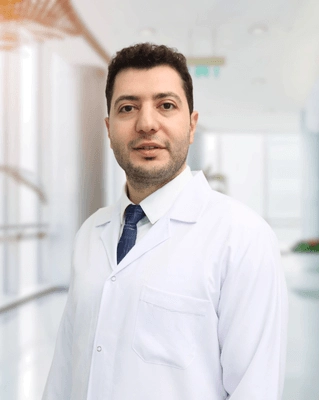
Op. Dr. Anıl Kaya, eye surgeon (ophthalmologist), decides together with the patient which method may be more suitable for them, assessing corneal thickness, topography findings, dry eye and lifestyle needs together. Occupation, sporting habits and any past history of dry eye are also discussed; this combination of information, rather than a single measurement, identifies the right method. Once decided, the patient receives a detailed explanation of the first follow-up date and the points to watch during recovery, including protective glasses, drop use and sun protection.
How Does the Doctor Decide Between PRK and Femto LASIK?
Which One Is Right for Me — PRK or Femto LASIK?
The most reliable way to work out which method suits you is to read the decision-support content on choosing a laser method, then arrange a laser suitability assessment. Your refractive error's type and degree also matter, and the myopia, hyperopia and astigmatism pages add useful detail. Which method is right for you only becomes clear once measurements are taken at assessment. Both approaches aim to reduce dependence on glasses or contact lenses over the long term; the difference lies in how the procedure is performed and in recovery.
If your corneal thickness is borderline
PRK tends to be considered a more flexible option, since no tissue is separated to form a flap.
If recovery speed is your priority
With Femto LASIK, vision usually becomes noticeably clearer within the first day.
If you play contact sports or work in a role with impact risk
PRK can stand out, since it carries no risk of flap displacement.
Frequently Asked Questions
Is PRK or Femto LASIK less uncomfortable?
For most patients, discomfort in the first few days is milder after Femto LASIK than after PRK, though this can vary from person to person.
Which gives more lasting results?
Over the long term, both methods can achieve similar success rates; how lasting the result is also depends on the individual's eye structure.
Which is preferred for a thin cornea?
Because no flap is created, PRK is generally considered a more flexible option for a thin cornea.
Can you switch from PRK to Femto LASIK, or the other way round, later on?
The suitable method becomes clear at assessment; the aim is to choose the right method from the outset rather than switching between the two afterwards.
Are both methods used for the same refractive errors?
Yes, PRK and Femto LASIK can both be considered for myopia, hyperopia and astigmatism; unlike SMILE, there is no restriction for hyperopia.
References
- Comparison of 9.0 and 9.2 mm Flap Diameter Options of Femtosecond Laser In-Situ Keratomileusis for Hypermetropia and Hypermetropic Astigmatism — Journal of Ophthalmology (PMC), 2019
Appointment
To find out which method may suit you, request an appointment through the contact page and arrange a laser suitability assessment. Sharing your current glasses prescription and any earlier eye records helps speed up the assessment. Call or use the contact page form to reach us.
Find the Right Path for You
There are many different conditions and options in this area — browse by topic below, or answer a few questions to see the step closest to your situation.
Explore by Topic
The Basics
4 pagesDiagnosis & Methods
1 pageComparisons
3 pagesDecision Support
1 pageFind What Suits You
Laser Eye Surgery RoadmapA few questions, the right next step for you
Ophthalmologist · Kartal, Istanbul
Why Op. Dr. Anıl Kaya?
Related Pages
Would you like to contact the doctor with a Laser assessment tailored to you?
There are two ways. If you would like the doctor to know your situation before replying, complete the Laser Roadmap first; if your question is short, write directly. Both reach the same team.
Your age and a short sentence are enough; no medical terms needed. What you write is only sent when you send it; this page stores no information.