
What Is a Routine Eye Examination, and How Often Should You Have One?
A routine eye test checks vision, eye pressure and eye health, symptoms or not; advised if you're over 40, have diabetes or wear glasses. Book an examination in Istanbul.


A routine eye examination is a basic check that assesses visual acuity, intraocular pressure and the overall health of the eye, even without a specific complaint. Regular examinations are recommended for adults over 40, those with a family history of eye disease, diabetes, or who wear glasses or lenses, so problems can be caught early.
Written by Op. Dr. Anıl Kaya
What Is a Routine Eye Examination?
A routine eye examination is the basic building block of a general eye check-up. It reviews the eye's overall health and the quality of your vision even without a specific complaint, combining several steps in one visit: measuring visual acuity, checking intraocular pressure, examining the front of the eye and, when needed, assessing the back of the eye. The aim is to catch a problem early, before symptoms appear. It is not tied to a particular condition, simply part of preventive eye care. Some eye diseases show no symptoms until an advanced stage, so unlike a symptom-driven visit, this is a screening repeated at regular intervals. Its scope depends on the patient's age, general health and risk factors, so the same tests do not apply to everyone.
Quick Facts
A routine eye examination usually takes 20-30 minutes and is normally completed in one visit. Visual acuity, intraocular pressure and the front of the eye are checked as standard; a fundus examination, when needed, follows pupil dilation with drops. Adults are advised to have this check at regular intervals even without symptoms, more often in higher-risk groups.
What Does a Routine Eye Examination Assess?
The doctor checks visual acuity, whether an updated glasses prescription is needed, the eyelids and front of the eye, intraocular pressure and, depending on the findings, the back of the eye. Each check targets an early sign of a different eye condition. Examining the eyelids and lash line can reveal surface findings such as blepharitis or dry eye. Intraocular pressure is an important indicator for glaucoma, which can progress without obvious symptoms. When needed, a fundus examination adds an assessment of the retina and optic nerve head, so the results cover not only how clearly you see but also the structural health of the eye. These findings are then brought together into a follow-up plan tailored to the patient.
Who Should Have a Routine Eye Examination?
Regular eye checks are recommended for adults even without a complaint, since many eye diseases show no early symptoms. This matters especially for people over 40, those with a family history of glaucoma, cataract or retinal disease, people with diabetes, and anyone who wears glasses or contact lenses. Because eye disease often progresses silently, keeping vision under regular review makes it easier to catch a problem before it advances. The recommended interval depends on age, general health and risk factors; the ranges below are general guidance, and the exact frequency is set by the doctor after the examination.
Recommended Examination Frequency by Risk Group
Which Symptoms Mean You Should Book an Examination Sooner?
Blurry vision, a sense that your prescription keeps changing, worsening night vision or eye fatigue are symptoms that should bring your check-up forward; book an appointment promptly rather than waiting for your next routine visit. Eye redness that lasts, increased light sensitivity, or vision changes with pain around the eye should also not be left unassessed. Sudden vision loss or double vision calls for a more urgent assessment rather than a routine examination, so see an eye doctor without delay. Any visual complaint that clearly affects daily life and does not resolve on its own is a sign to book an examination sooner rather than later.
How Is a Routine Eye Examination Performed?
The examination starts with a brief conversation about any complaint and your history; at our clinic in Istanbul, Op. Dr. Anıl Kaya tailors it to your symptoms and risk factors. Visual acuity is measured, a glasses prescription checked if needed, the eyelids and front of the eye examined under a slit lamp (biomicroscope), and intraocular pressure measured. The doctor may add further assessments, such as a fundus examination, and the visit is usually completed in one appointment. If drops are used, near vision may stay blurred for a few hours, so bear this in mind if driving that day. The steps below summarise the general flow.
- 1History and Symptom Review. A short conversation covers any current complaint and risk factors such as age, family history and chronic conditions.
- 2Visual Acuity Test. Each eye is tested separately; a glasses prescription is measured at this stage if needed.
- 3Front-of-Eye and Eyelid Examination. The eyelids, lashes and front surface of the eye are examined under a slit lamp (biomicroscope).
- 4Intraocular Pressure Measurement. Intraocular pressure, an important indicator for glaucoma, is measured.
- 5Fundus Examination, If Needed. Depending on the findings, the pupil may be dilated with drops so the retina and optic nerve can be assessed.
What Do the Results of a Routine Eye Examination Mean?
The examination gives a clear picture of your visual acuity, intraocular pressure and the general condition of the eye tissues. If all findings are normal, the doctor sets a recommended interval for your next check. If a finding falls outside the normal range, the doctor explains which area it relates to, such as a refractive error, raised eye pressure or a fundus finding, and arranges further tests if needed. Some findings need no immediate treatment, only monitoring at set intervals. Interpreting results is a judgement made by the doctor, and the same finding can lead to a different recommendation depending on age and health. Several minor findings occurring together are prioritised at the doctor's discretion.
Which Conditions Can Be Detected During a Routine Eye Examination?
Conditions picked up during a routine examination include refractive errors such as myopia, hyperopia and astigmatism, as well as cataract, glaucoma and retinal disease. Since many of these can progress for a long time without symptoms, diagnosis is often made during a routine check rather than because of a complaint. Minor eyelid and surface findings can also be noticed, and rarer findings may need further testing to confirm. How often each occurs varies; the grouping below reflects a general tendency, not an exact proportion. Some affect the eye alone, while others, such as diabetes, can also show up as changes in the eye.
How Often Are Findings Detected During the Examination?
If a Problem Is Found During the Examination, What Are the Treatment Options?
The path forward depends on what the examination finds. Refractive errors may be managed with glasses, contact lenses or, in suitable candidates, laser eye surgery; cataract is treated surgically, glaucoma with medication, laser or surgery, and retinal disease with an approach tailored to the condition. The right approach depends on the findings and the patient's general health. Some findings need no immediate treatment, only monitoring at set intervals. A finding such as eyelid drooping that is also a cosmetic concern may lead to a referral for a medical aesthetics assessment. Several options may be weighed in sequence rather than all at once. The doctor shapes the decision around the finding, its pace and its effect on daily life.
Frequently Asked Questions
How often should a routine eye examination be repeated?
In general, adults are advised to have a check every few years, with more frequent visits recommended for those with risk factors such as being over 40, having diabetes or a family history; the exact interval is agreed with your doctor after the examination.
Is the examination painful?
No, a routine eye examination does not hurt; some tests may involve a brief puff of air on the eye or a bright light.
I wear contact lenses - should I come to the examination wearing them?
You may be asked to remove your lenses, so it is a good idea to bring your glasses with you as well.
Can I drive after the examination?
If drops were used for a fundus examination, your near vision may be blurred for a few hours until the effect wears off, so it is advisable to wait before driving.
Why is my pupil dilated during a routine examination?
In some patients, drops are used to temporarily dilate the pupil so the back of the eye can be seen more widely and clearly; this step is not carried out at every visit, only when the doctor considers it necessary.
Do children need a routine eye examination too?
Because a child's vision is still developing, an eye check before school age is recommended; if there is a family history of eye disease, the timing of the check should be planned together with the doctor.
Can I find out the results on the same day?
Many findings, such as visual acuity and intraocular pressure, are assessed during the examination itself; if further tests are needed, the results are reviewed and explained separately by the doctor.
References
- Eye Exam and Vision Testing Basics — American Academy of Ophthalmology (AAO), 2026
- Eye Health Information for Adults 40 to 65 — American Academy of Ophthalmology (AAO), 2026
Booking an Examination
You can book a routine eye examination at our Istanbul clinic, with or without symptoms.
Find the Right Path for You
There are many different conditions and options in this area — browse by topic below, or answer a few questions to see the step closest to your situation.
Explore by Topic
Find What Suits You
Eye Examination RoadmapA few questions, the right next step for you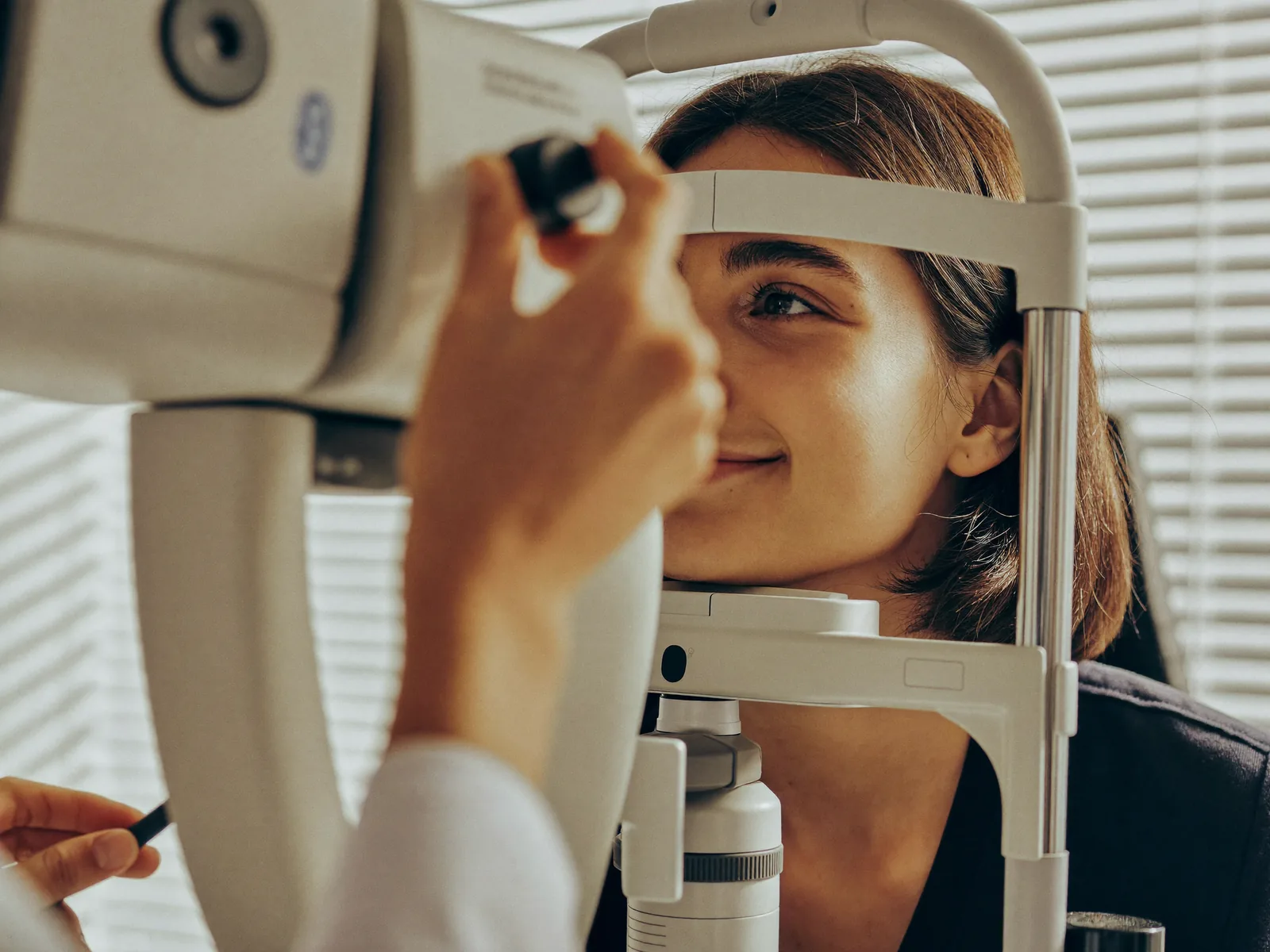

Related Pages
What Is a Full Eye Examination, and What Does It Check?
What Is a Fundus Examination and Why Is It Done?
How Is a Glasses Prescription Measured? The Refraction Test
Why Does Blurry Vision Happen?
Cataract Symptoms, Surgery and Intraocular Lens (IOL) Options
Retinal Diseases and Treatment Options
Medical Aesthetics Treatments
Contact and Appointments
Would you like to contact the doctor with a Eye Exams assessment tailored to you?
There are two ways. If you would like the doctor to know your situation before replying, complete the Eye Exams Roadmap first; if your question is short, write directly. Both reach the same team.
Your age and a short sentence are enough; no medical terms needed. What you write is only sent when you send it; this page stores no information.